

'Still the king of bright room OLED TV': I tested Samsung and LG's latest flagship OLED TVS side-by-side to see is better for bright rooms — here's the one I'd pick
 (Image credit: Future)
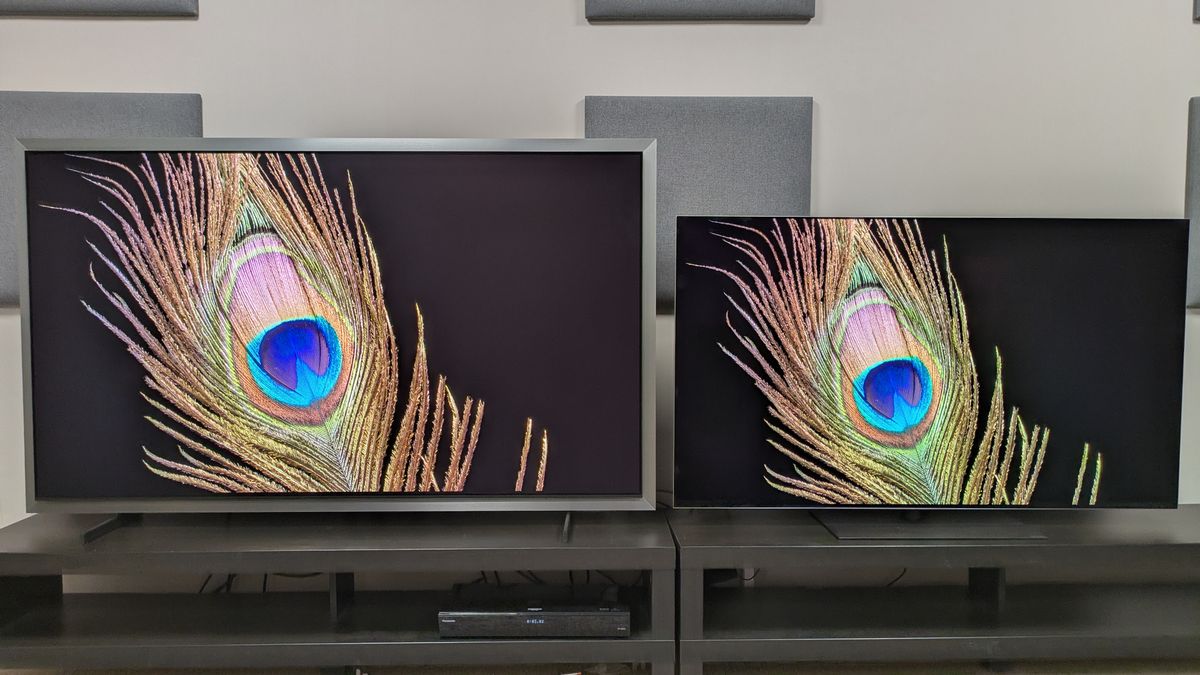
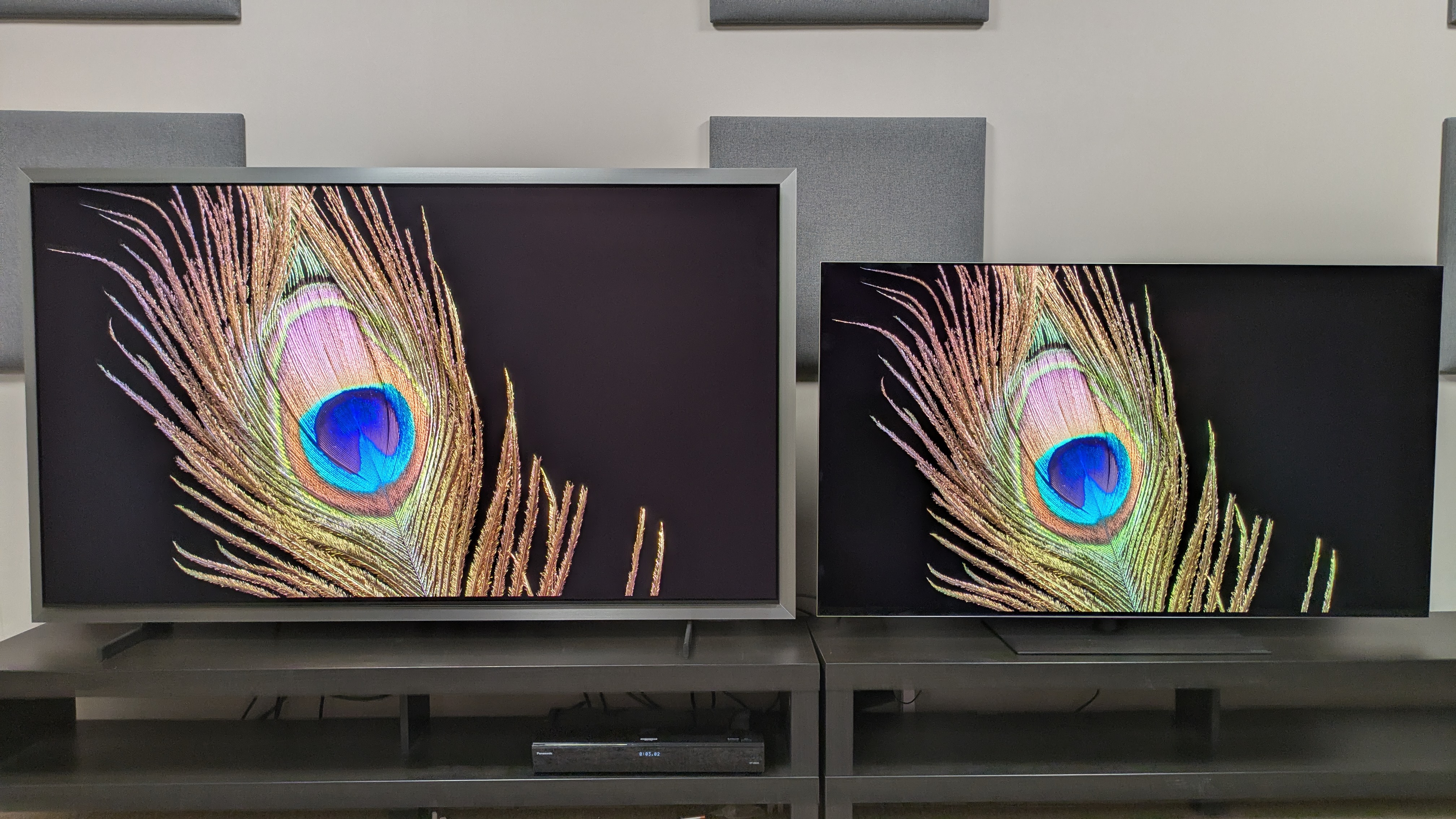
The Samsung S95F was our pick for the best OLED TV for bright rooms in 2025, thanks to its anti-glare matte screen that eliminates reflections, and its high brightness. These combined to make even dark movies viewable in really bright rooms on it: something most other OLED TVs just couldn’t achieve — even the S95F’s rival, the LG G5.
It remained the king until the LG G6 arrived this year. While the G6 still shows some mirror-like reflections when the screen is turned off, the brightness of these reflections is toned so far back that they don't really distract any more when you're viewing something.
You can now watch movies — even the super-dark The Batman — in Filmmaker Mode in bright conditions without distraction, but with the deep black tones OLED is famed for retained. When I compared the G6 with the S95F, I actually picked the G6 as the new king of bright-room OLEDs.
Fast forward a few months and the Samsung S99H (known as the S95H in the US — it's the same TV with a different name) has arrived in our testing lab. It has the latest version of Samsung's anti-reflection matte layer, so can it reclaim the crown as the best option for bright-room viewing? I've already compared the S95H/S99H with the G6 where I focused on other picture quality elements such as dark-room viewing and colors, and they came out basically even. So let's see how they compare in bright conditions.
Out-and-out reflections
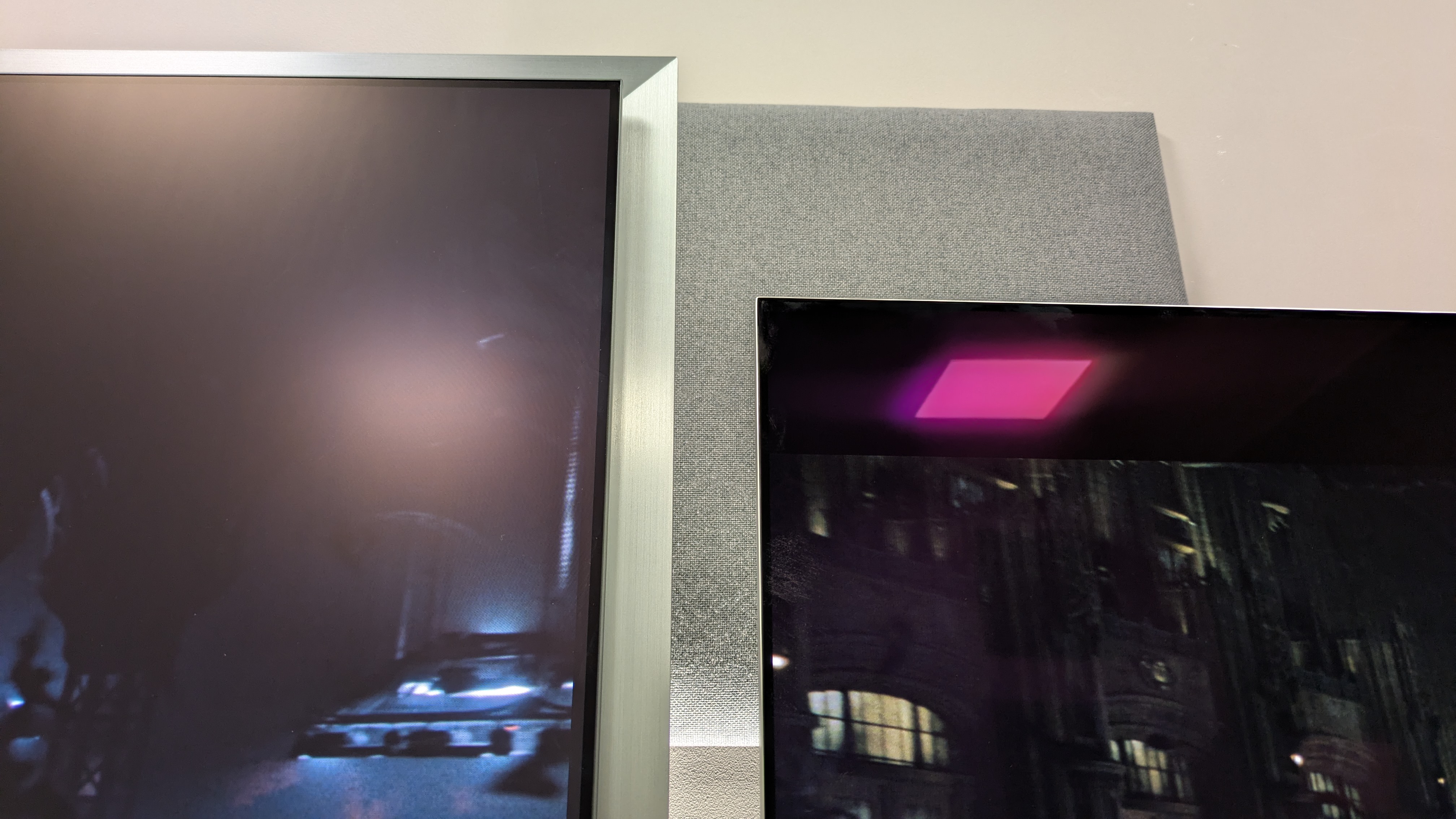
The first area I decided to test was both TVs' reflection handling capabilities. This meant which TV was the outright most effective at eliminating mirror-like reflections caused by lights and objects.
Using the overhead lights in our testing lab, after getting the right angle, it was pretty clear the S95H/S99H was the superior model. Looking at the screen, the light from the overhead light is reduced to haze and the actual shape of the light is illegible: perfect if you’ve got pesky lights or windows in your bright room that you can’t hide, and that your eye is drawn to involuntarily focus on.
On the G6, the shape of the light, and the light itself, was still legible. It was certainly an improvement over its predecessor, the LG G5, as the latter had a pretty reflective screen — but there was no doubt that the overhead light was still visible.
Sign up for breaking news, reviews, opinion, top tech deals, and more.
Even looking at the shut-off, blank screen, you could see objects, such as other TVs we store in the same room, on the screen of the G6. The S95H/S99H on the other hand had absolutely nothing on screen, other than the haze of light from overhead. So for pure reflection-killing, the S95H/S99H is best.
Black level performance
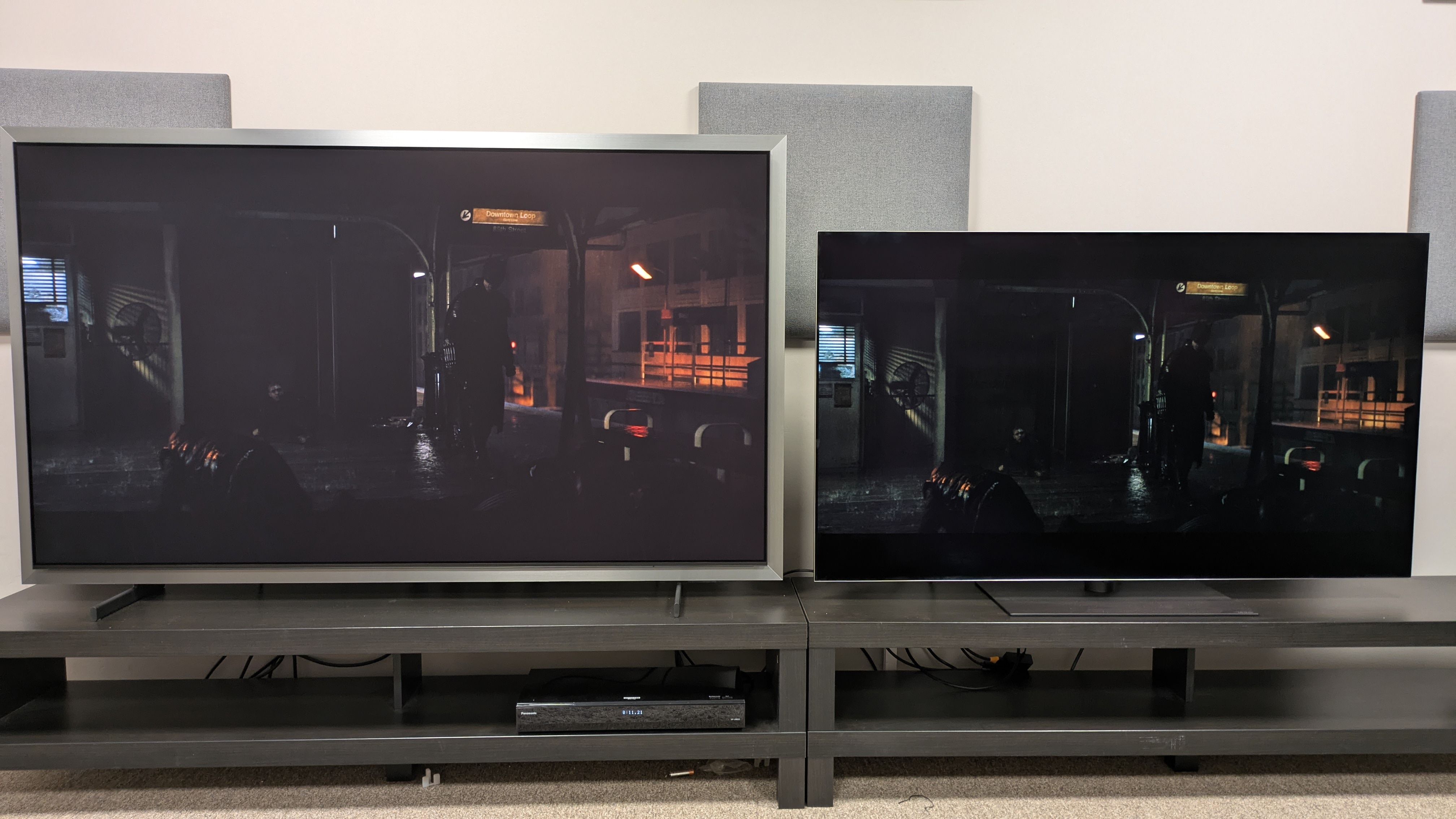
Watching a movie is a more complicated story, however. With both TVs set to Filmmaker Mode, and watching the dark-tone torture test that is The Batman, the G6 did a better job maintaining black levels and delivering more impactful contrast than the S95H/S99H.
In a scene where Batman stands in a dark subway platform, having just defeated a gang of thugs, the first thing that was apparent was the S95H/S99H’s Filmmaker Mode was very dim compared to the G6. Due to the low perceived brightness and the raised black tones of the mate screen, large parts of the scene were illegible, with Batman himself partly obscured in black and the detail in the walls at the back of the platform not as clear as they were on the G6. The G6 also has better shadow detail, with more of Batman’s suit and the creases in the thug’s black jackets more legible too.
Switching to Alien: Romulus, it was the same story. As the crew approached the Nostromo, the blackness of space was much inkier and deeper on the G6. The S95H/S99H had a hazy gray sheen over it from the matte screen, which affected the integrity of the black tones. It also meant the rings around the moon didn’t have quite as much punch as the G6.
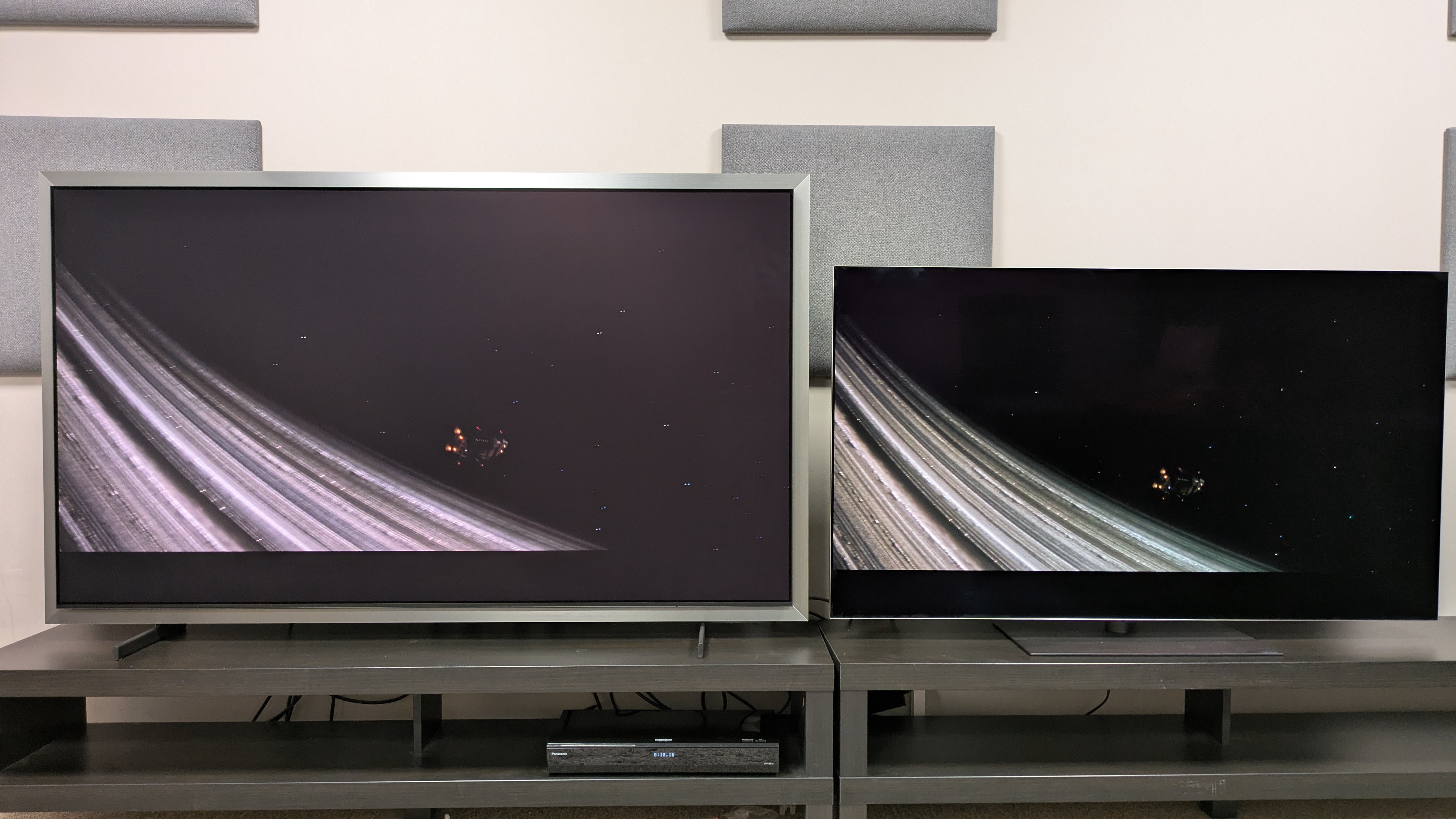
I found it odd that there was such a perceived brightness difference between the two as when I measured their brightness, the gap wasn’t as big as the real-world viewing suggested. The S95H/S99H clocked in at 2,739 nits of peak HDR brightness (10% window) in Filmmaker Mode, while the G6 clocked in at 3,004 nits. While 250 nits is nothing to sniff at, the pictures on screen suggested a bigger gap.
In fact, fullscreen HDR brightness was about as close as it gets. In the same HDR Filmmaker Mode, the S95H/S99H hit a measured fullscreen brightness of 449 nits, while the G6 hit 451. The human eye can’t perceive that little difference, yet in person, the G6 had the more complete picture.
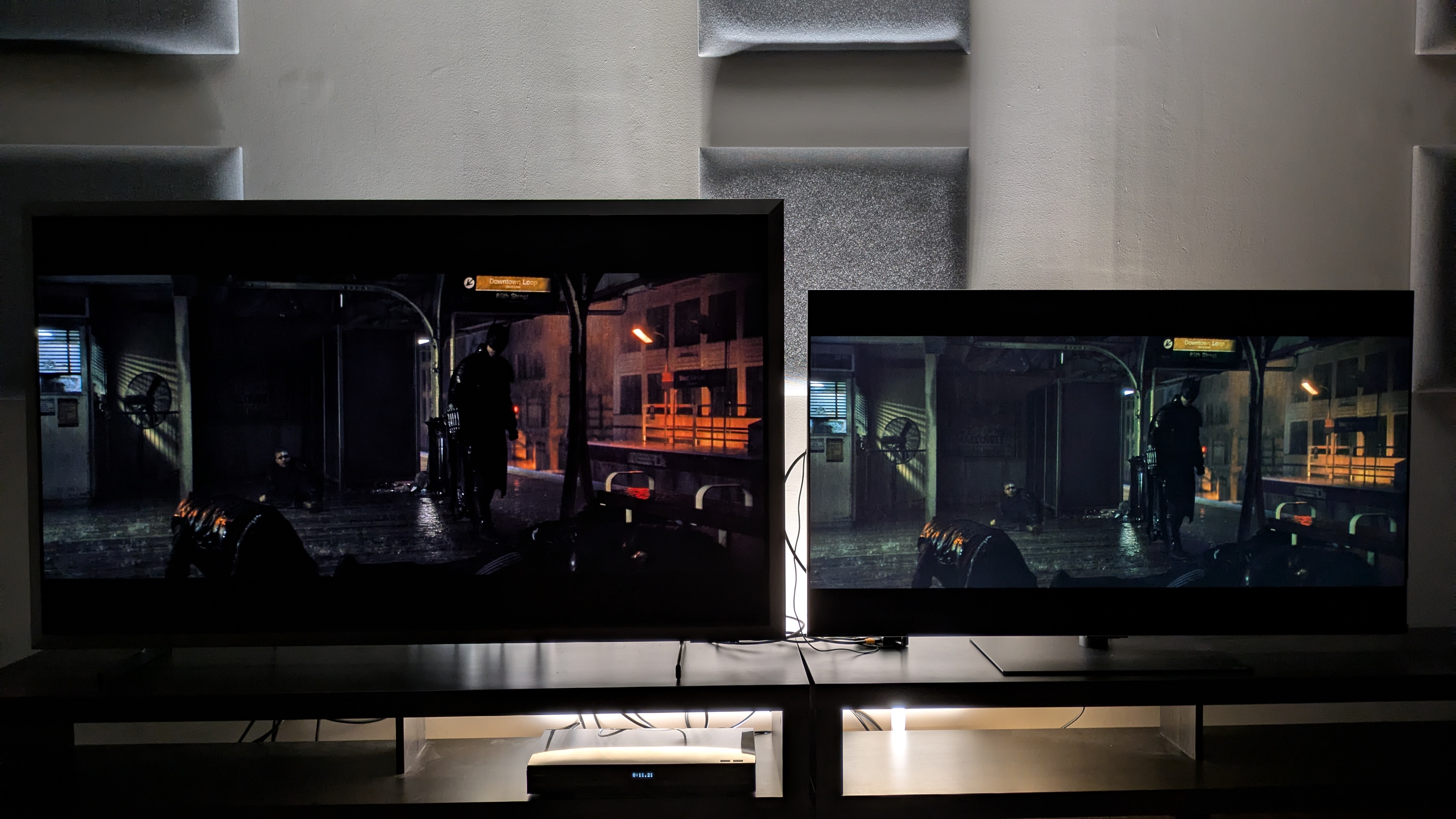
In fact, watching in a darker room, the S95H/S99H delivers a richer, stronger picture. The same subway scene from The Batman shows deeper blacks and looks more accurate to the movie’s gloomy tone. On the G6, I found that its brightness hampered it slightly. While it did demonstrate good shadow detail, its brightness affected the quality of the darker tones on screen, and the image just wasn’t as satisfying as on the S95H/S99H.
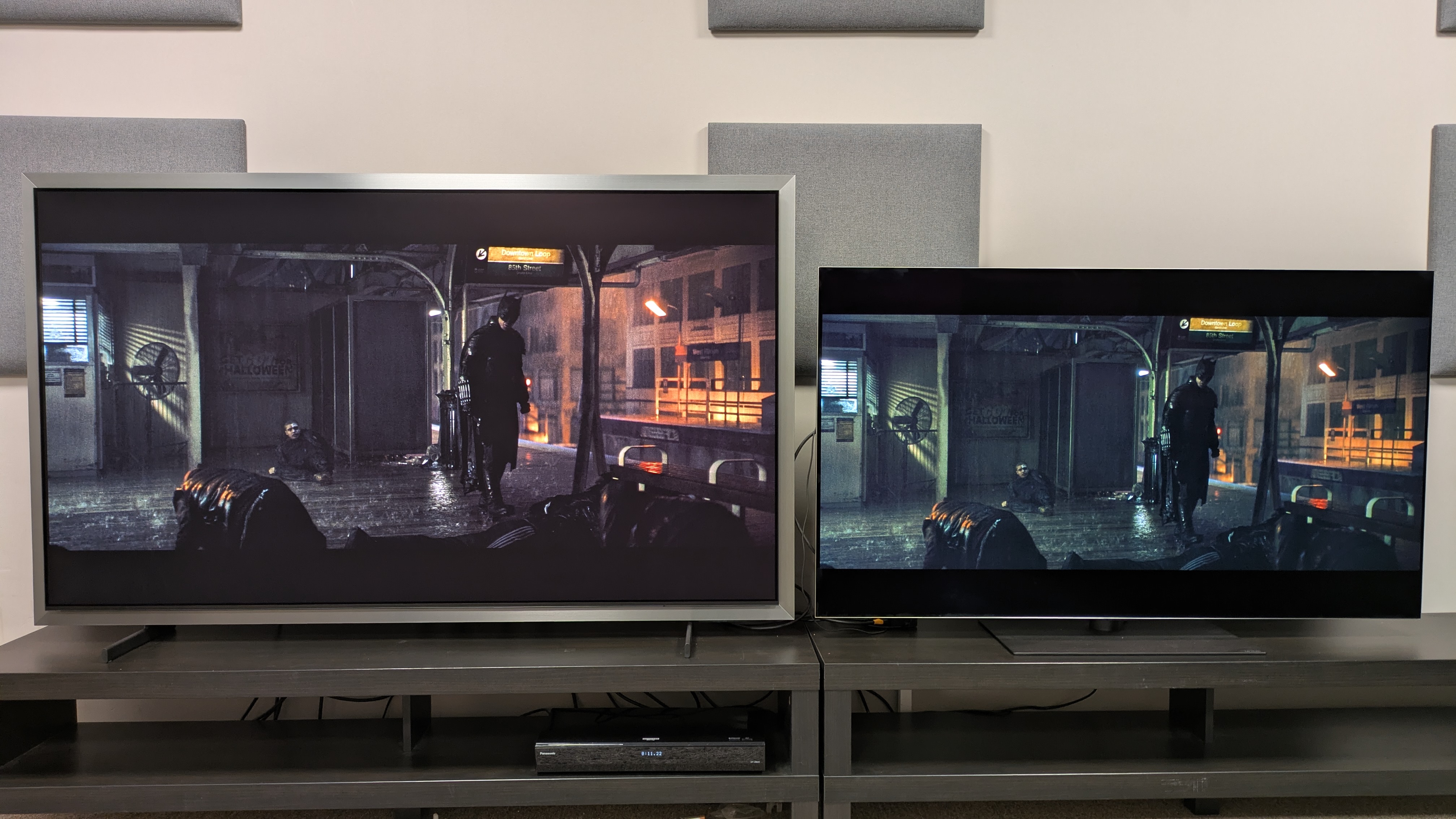
In fairness to both TVs, some settings tweaks can solve some of the issues above. On the G6, dropping contrast from 50 to 49 takes away some of that over-brightness, while switching Tone Mapping from the default Static to Active on the S95H/S99H in Filmmaker Mode adds some brightness, although the image doesn’t feel as accurate then. But for these tests, I kept both TVs in their default settings.
The better TV for bright rooms
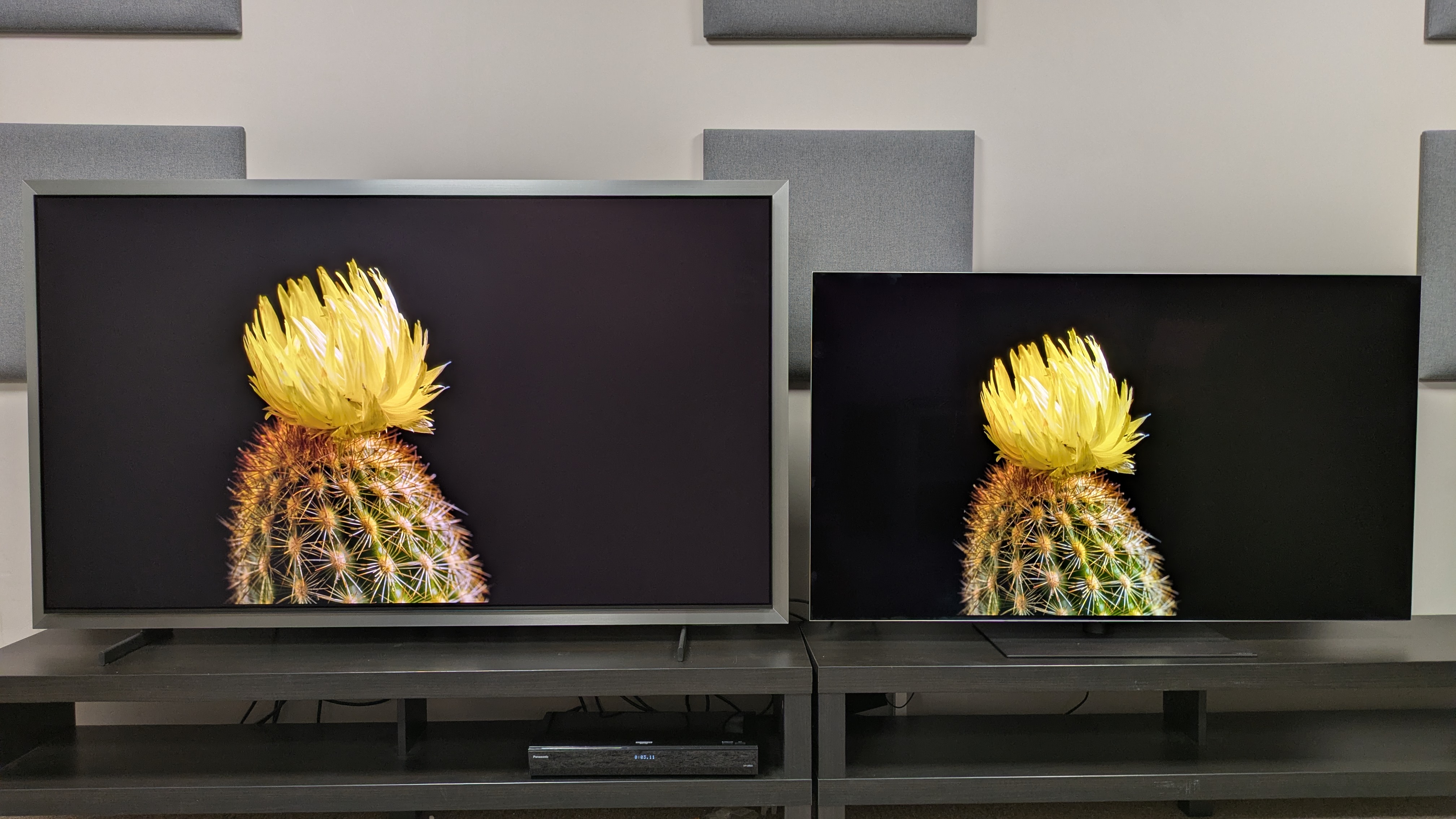
Honestly, both these TVs are fantastic for bright-room viewing. They both do a great job of eliminating reflections and delivering excellent picture quality despite being in a bright room. OLED’s nemesis has always been bright rooms and reflections, and it’s great to have two TVs that can handle the light. You can’t go wrong with either of these TVs for bright rooms and they’re both excellent OLED TVs.
If you have a bright room, either of these TVs would work. Your choice may depend on your circumstances. If you know you'll be watching a lot with light flooding in during the day, the S95H/S99H is the better option for keeping reflections to an absolute minimum. If you can control the light in your room more, the G6 is probably the better option.
For me, if I had to pick one TV for bright-room viewing, I’d go for the G6. While the S95H/S99H is seriously good at dealing with pesky reflections, and is an improvement over the superb S95F, I favored the G6’s richer black tones in brighter rooms.
Although the G6 isn’t as complete at removing mirror-like reflections, so there are some present in darker scenes, it’s effective enough to make watching darker movies in a bright room feel less like a chore than it did on its predecessor, the G5 — but with the contrasty feeling you want from an OLED TV.
There's always a trade-off with choosing a bright-room TV of reflection reduction versus preserving the image accuracy. Last year, the balance fell in favor of Samsung's matte display. This year, the G6’s better black level performance combined with drastically lowering the impact of mirror-like reflections is enough to make it my pick for bright rooms — but the Samsung S95H/S99H is a brilliant TV for light rooms still.

Follow TechRadar on Google News and add us as a preferred source to get our expert news, reviews, and opinion in your feeds.
James is the TV Hardware Staff Writer at TechRadar. Before joining the team, he worked at a major UK based AV retailer selling TV and audio equipment, where he was either telling customers the difference between OLED and QLED or being wowed by watching a PS5 run on the LG 65G2. When not writing about the latest TV tech, James can be found gaming, reading, watching rugby or coming up with another idea for a novel.
What's Your Reaction?
 Like
0
Like
0
 Dislike
0
Dislike
0
 Love
0
Love
0
 Funny
0
Funny
0
 Wow
0
Wow
0
 Sad
0
Sad
0
 Angry
0
Angry
0






Comments (0)