

Quote of the day by TSMC founder Morris Chang: 'Globalization is almost dead and free trade is almost dead"
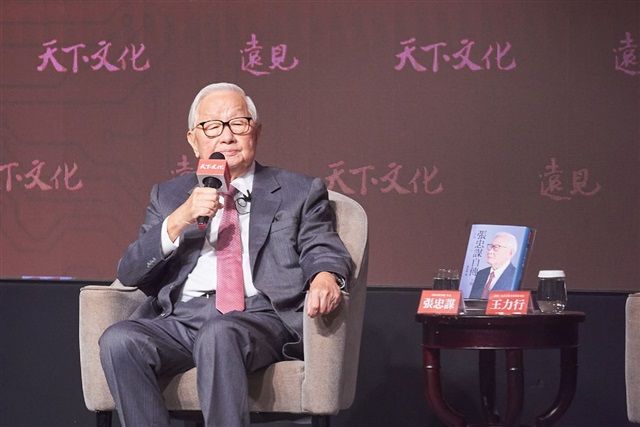
 (Image credit: Digitimes)
The Taiwan Semiconductor Manufacturing Company (TSMC) is one of the most significant and powerful forces in the technology world today.
While it's not the only chipmaker out there, it produces around 90% of the world's most advanced semiconductors and has up to 70% market share of the global contract chip-making market.
Global fracturing
The founder of TSMC, Morris Chang, gave his verdict on the state of the global supply chain during the opening ceremony of the company's advanced chip plant in Arizona.
Quote of the day
This article is part of TechRadar Pro's QOTD project to provide an insight into the minds of the brightest and most recognized figures in the technology industry today and in years gone by. Read the full series here.
Chang was careful not to describe the global supply chain or globalisation as completely dead but "almost" dead – indicating that it still exists in some way but has been heavily reconfigured to adapt to changing times.
There are several reasons for this, including rising geopolitical tensions, especially between the US and China, as well as a move toward manufacturing repatriation and the formation of blocs rather than the promotion of ever-closer global ties and free trade for the sake of it. That is the context in which TSMC began operating, and a way of the world that is being lost.
Crises and shocks
Since COVID-19, there have been a series of supply chain shocks that have hit businesses and, in the end, consumers when it comes to the price of technology.
The chip crisis that lasted between 2020 and 2023 was the most disruptive shortage of technology that hit countless sectors worldwide. This was caused by the surge in demand for electronics, with people homebound due to the lockdown measures, the geopolitical cracks that started to form, as well as the death of just-in-time logistics.
Sign up to the TechRadar Pro newsletter to get all the top news, opinion, features and guidance your business needs to succeed!
Although the crisis eventually abated, a new shortage in memory has hit companies and consumers across the world in a similar way. These new problems, however, are more attributable to the AI boom, in which the surge in AI data centers and demand for high-bandwidth memory have led to bottlenecks in the production of consumer-grade memory like DDR5 RAM and SSD storage.
Keumars Afifi-Sabet is a freelance contributor for Tech Radar and the Technology Editor for Live Science. He has written for a variety of publications including ITPro, The Week Digital and ComputerActive. He has worked as a technology journalist for more than five years, having previously held the role of features editor with ITPro. In his previous role, he oversaw the commissioning and publishing of long form in areas including AI, cyber security, cloud computing and digital transformation.
What's Your Reaction?
 Like
0
 Dislike
0
 Love
0
 Funny
0
 Wow
0
 Sad
0
 Angry
0







Comments (0)