

Man jailed for a month despite Flock showing he was 5 miles from crime scene
“Obviously the wrong car”
Cop seemingly ignored Flock camera timestamp to justify arrests.
A San Diego police department is facing a lawsuit after jailing a man for a month based on a Flock camera alert that cops allegedly should have known, based on the timestamp, did not depict the car that they were looking for.
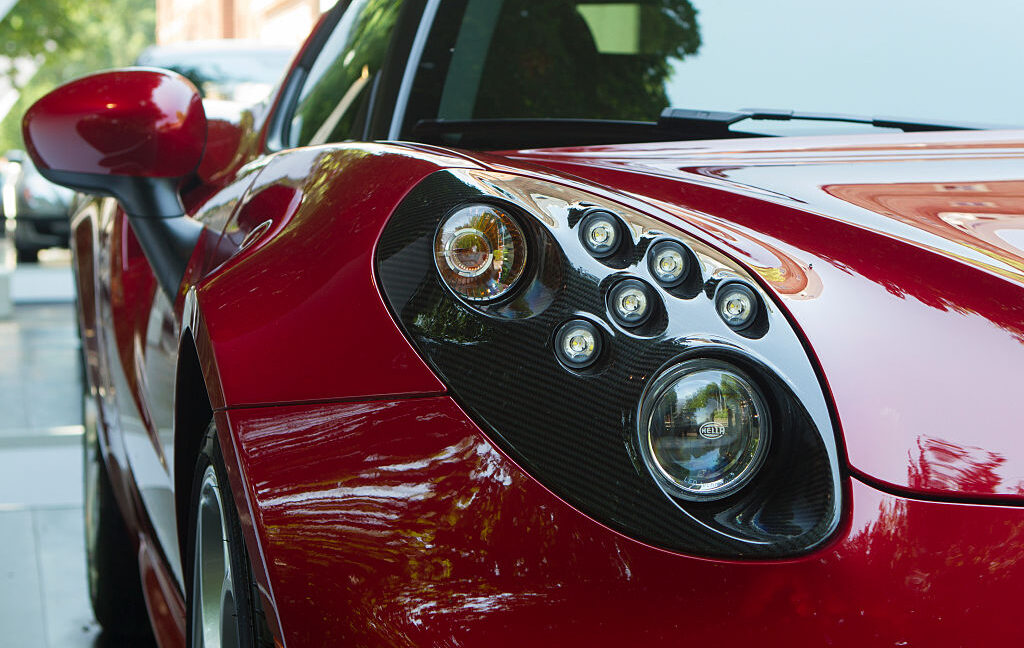
Last November, Hugo Parra was arrested on felony charges after San Diego police relied on Flock data and a witness statement to wrongly connect him to an attempted carjacking at gunpoint, the Times of San Diego reported. Cops were looking for a red Alfa Romeo car with tinted windows and a man wearing a gray hoodie, and Parra happened to be wearing a white hoodie while riding in a friend’s car that roughly matched the vehicle description.
Although Flock cameras can capture license plate data, cops did not have even a partial plate to help them verify if the car was involved in a violent crime. But the Flock data cops used to justify the arrest actually showed that Parra was five miles away at the time of the crime, Parra’s attorney, Alex Coolman, told the Times of San Diego. Rather than arrest him, cops could have used that data, as well as Parra’s cellphone location data, to corroborate Parra’s statement that he was innocent, Coolman said.
“This Flock hit was obviously the wrong car, as it could not have been in both places simultaneously,” Coolman said.
Instead, police set aside the evidence suggesting that Parra’s car was different from the vehicle police were pursuing and called in the witness, who picked out Parra as the suspect in a lineup. However, the witness only identified Parra based on superficial features, including “the jacket and the beard” and “the skin color,” the police report said, according to the Times of San Diego.
Parra, who was on probation at the time of the arrest, was “in disbelief” after cops decided to jail him. He spent nearly a month in jail, “full of fear and adrenaline because I was being charged with a violent crime,” he told the Times of San Diego.
Now, he and his friend who owns the car that Flock flagged, Ariel Beltran, are getting ready to sue the city for negligence and civil rights violations. The Times of San Diego reviewed tort claims filed in April, which argued that “San Diego Police misread its own surveillance system and ignored exculpatory evidence in a rush to judgment.”
As a penalty, the city owes the men $1.5 million each in damages, their filing alleged.
Neither the police department nor the city will comment on the pending litigation, but Coolman told the Times of San Diego that “the city has denied the men’s claims,” so the lawsuit will proceed.
Making arrests “with less information upfront”
Backlash against Flock is mounting, as the camera network has been used to surveil protesters, track abortion-seekers, and detain immigrants, digital rights group the Electronic Frontier Foundation reported. Some local groups are also resisting FBI moves to get “near real time” access to Flock data. While the EFF warns the cameras are most often used for low-level investigations like noise complaints or employment background checks, communities across political divides have questioned whether the purported benefits of the cameras are worth sacrificing privacy and risking government surveillance.
But San Diego has continued to embrace Flock. One month after Congress members called for probes into “inevitable” Flock abuse, the San Diego Police Department “looked to bolster its license plate reader program,” the Times of San Diego reported. On top of capturing audio and video, the cameras in the area could have begun collecting data from connected devices if the department signed a contract it was weighing in December. But the cops decided against using the new platform, Axios reported.
Although some police departments may not be ready to pilot Flock’s data-integration platform, they likely have encountered earlier Flock messaging encouraging cops to turn to Flock for purposes beyond its license plate reader functionality.
On Monday, the Raleigh News & Observer published a watchdog report warning “No plate? No problem” after obtaining a 2024 product presentation prepared for the North Carolina State Bureau of Investigation’s license plate reader pilot program. In that presentation, cops were reminded that “cameras record data including a car’s make, decals, and body type,” as well as bumper stickers and other unique features that comprise a “Vehicle Fingerprint” that cops can supposedly rely on to track specific cars across the camera network.
It’s touted as a way for law enforcement officials to get more information “even when you don’t have full plate information” and to “build stronger cases with less information upfront,” that report showed.
Parra’s case in San Diego is a powerful example of what can go wrong when cops build supposedly strong cases using less information.
In his lawsuit, he plans to argue that cops ignored relevant Flock data when pushing forward with his arrest. Most glaringly, the Flock alert that popped up and set cops on Parra’s trail was logged 23 seconds after the cops tried and failed to stop the actual suspect. That log showed that Parra’s friend’s car was five miles away at the time the pursuit began, which Parra’s lawyer said makes it implausible that cops were pursuing that exact vehicle.
Seemingly, the car just looked too strikingly similar for the detective who saw the Flock alert to treat the hit with appropriate skepticism. The Times of San Diego reviewed Detective Gary Gonzales’ report, which noted that he saw the Flock alert and immediately “recognized the vehicle in the image as the vehicle [we] were pursuing due to the red paint and black tinted windows.”
Cops also could have checked other Flock cameras in the network to track Beltran’s car and verify Parra’s story.
Coolman told the Times of San Diego that “mass surveillance without any sense of skepticism, or common sense, is a recipe for disaster.”
“Law enforcement will come up with false positives all the time, the broader the surveillance net is cast,” Coolman said.
Flock misuse creates lasting harms
San Diego counts among cities that remain invested in Flock, spending $2 million annually to maintain access. Around the US, some communities have won fights to end such contracts and defund Flock, however, a mayor of a New York city recently showed how far some local officials might be willing to go to block defunding efforts.
In April, Carmella Mantello, the Republican mayor of Troy, New York, accused the Democrat-led city council of putting the city in “jeopardy” by working to halt Flock funding, The Washington Post reported. To keep Flock cameras running, she declared a state of emergency—which the Post noted is typically reserved for floods and blizzards.
In response, the city council sued the mayor and, as the battle lines have been drawn, is considering passing a law to permanently limit Flock’s use in the area.
Flock cameras are supposed to help catch violent criminals and exonerate the innocent. But for innocent people who get accused of crimes based on Flock data, the technology can create lasting harms. Parra and Beltran are both left in a particularly vulnerable position, the Times of San Diego emphasized, since they now anticipate their prior records will influence cops and courts reviewing Flock footage and perhaps make them more susceptible to wrongful arrests.
Since his arrest, Parra told the Times of San Diego that he now gets “paranoid whenever a police officer or patrol vehicle comes into view.”
“I remember all the horrible accusations being said by the [district attorney] and judge about me, and how I was a dangerous threat to the public,” Parra said. “I was able to experience being seen as guilty until proven innocent instead of the other way around.”

Ashley is a senior policy reporter for Ars Technica, dedicated to tracking social impacts of emerging policies and new technologies. She is a Chicago-based journalist with 20 years of experience.
What's Your Reaction?
 Like
0
Like
0
 Dislike
0
Dislike
0
 Love
0
Love
0
 Funny
0
Funny
0
 Wow
0
Wow
0
 Sad
0
Sad
0
 Angry
0
Angry
0











Comments (0)