

I went inside FIFA's secret World Cup lab, and the 3D scanning tech I found there could change football forever
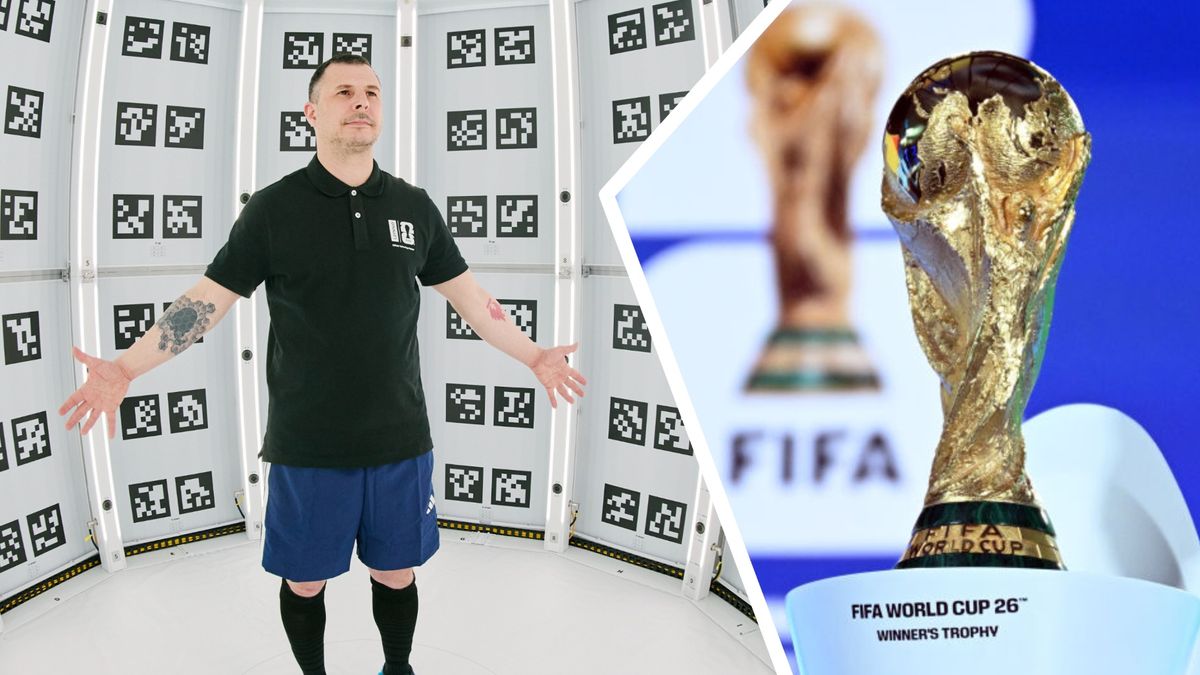
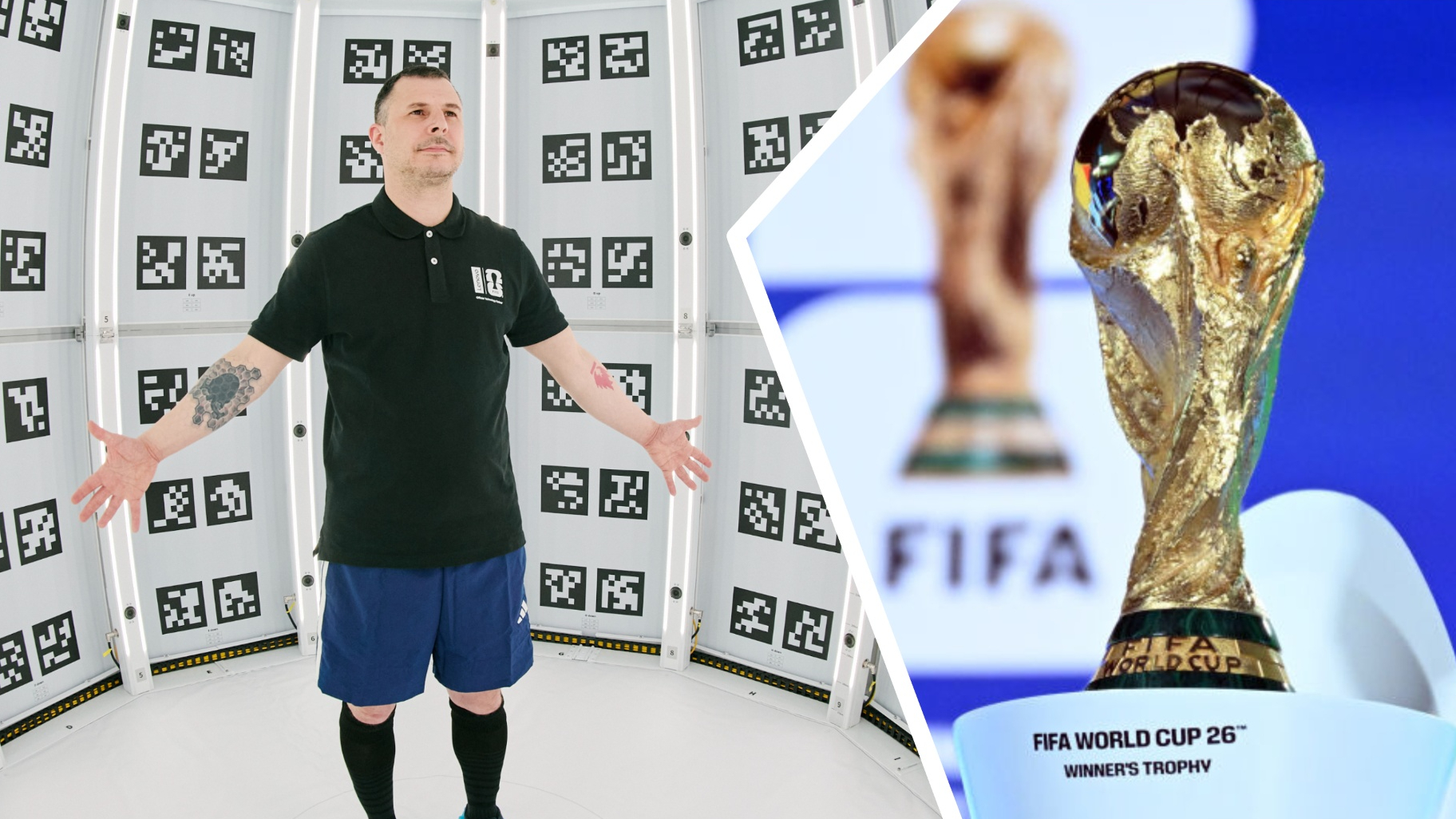 (Image credit: Future / James Day (left) / Getty Images / Anadolu (right))
The future of football is being decided six floors underground at FIFA's headquarters in Zurich.
Past the meditation suite made from Afghan onyx and the congress room that could pass for the United Nations Assembly Hall, Lenovo technology is being infused into every layer of the beautiful game in time for this summer's World Cup.
The VAR makeover
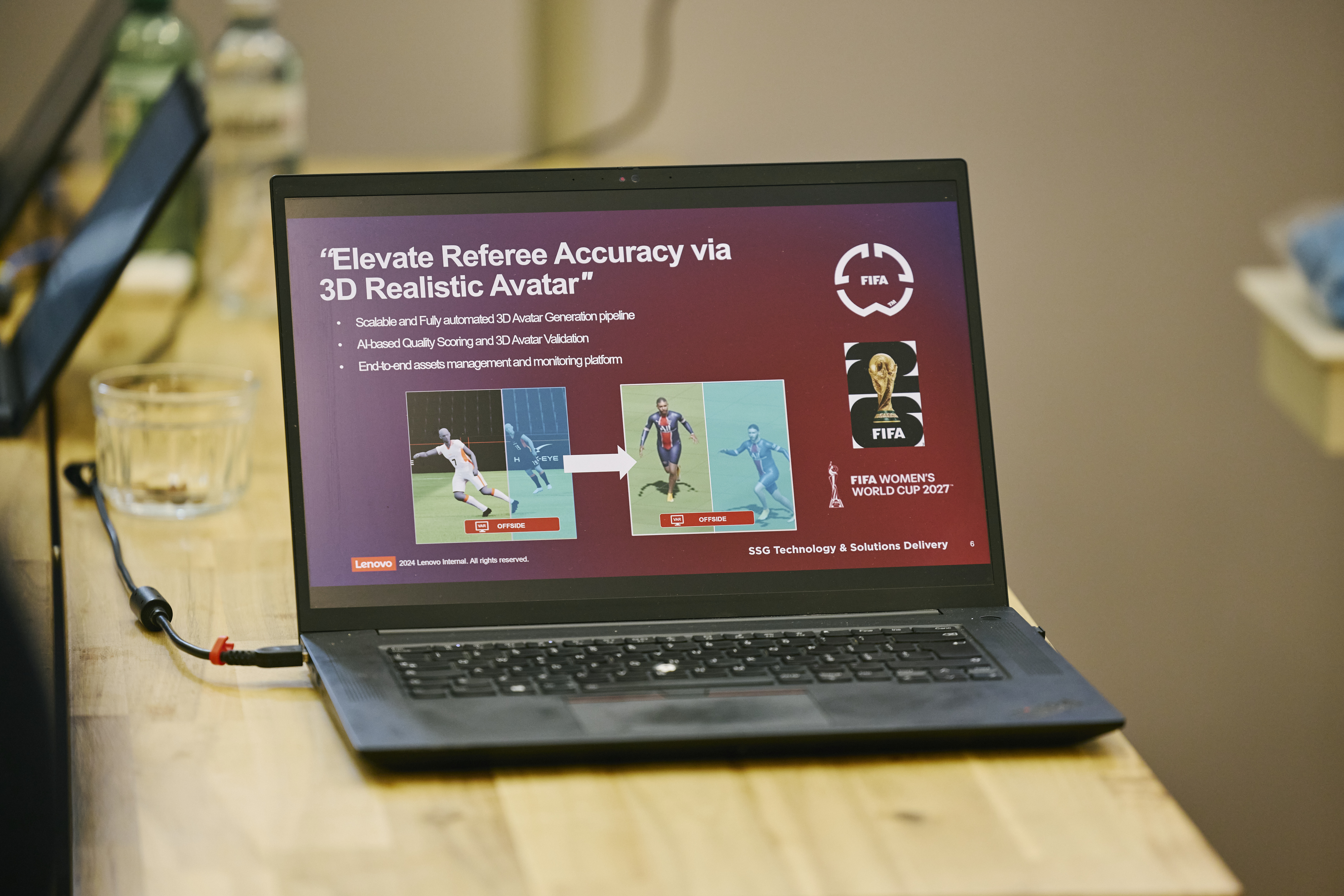
VAR's grey stick figures are finished. All 1,200 players at this year's tournament are being individually 3D scanned before a ball is kicked to produce a photorealistic digital twin — accurate to the millimeter — for faster, more precise offside calls.
Under the current system, a 6ft 5in Erling Haaland and a 5ft 7in Lionel Messi appear the same height. "Our mind is leading us to think: if it doesn't look real, it's probably not that adherent to the context," says Dr. Valerio Rizzo, the Lenovo neuroscientist who built the system.
"For the referee, they are human beings, and their brain is like one of the fans. They see that scene. They don't perceive the reality of that illustration, and maybe they can be biased as well."
Rizzo opens a presentation with a reference to Permutation City, Greg Egan's 1994 novel about digitizing human beings into a simulation. "This is like something that nowadays seems all the time closer and closer," he says.
Sign up for breaking news, reviews, opinion, top tech deals, and more.
The AI-enabled avatars are created with 3D Gaussian Splatting, where photographs are converted into clouds of trainable particles whose position, color, and rotation are optimized until they match reality exactly.
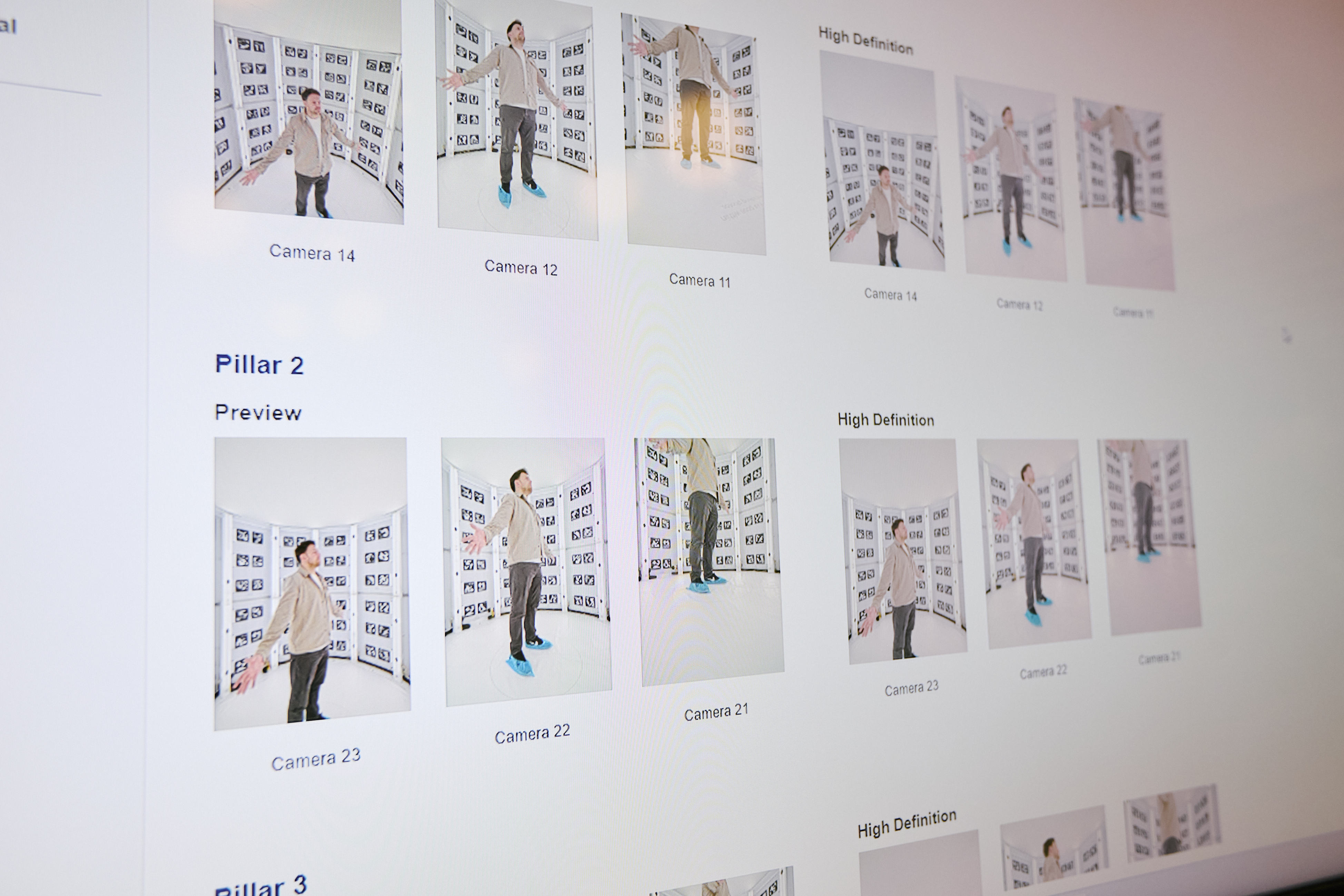
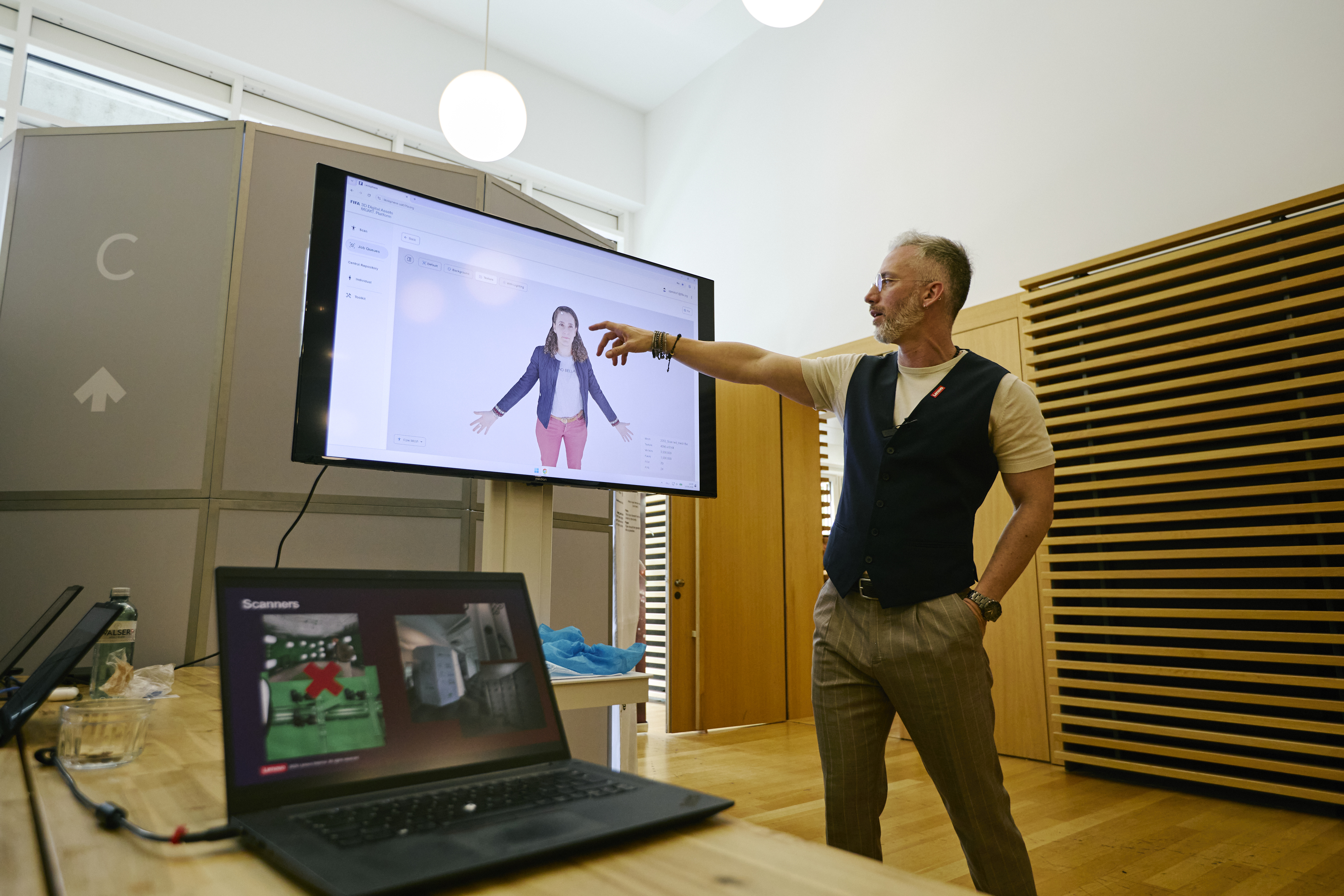
With three million data points per player and sub-centimeter accuracy, "It's not a default puppet, it's not a random shape," says Rizzo. "It's the actual body of the player. The chest size is the chest size. The foot length is the foot length of the player."
When I ask how much more accurate offside decisions will be, his answer is characteristically direct: "It's more accurate, it's more precise, it's more realistic. You can make up your own assumption."
A segmentation AI strips clothing from the body post-scan so jersey colour, squad number and boots can all be changed without reworking the underlying geometry. Hair is captured as individual particle strands rather than a single mesh. Micro-movements, such as fingers, are fixed algorithmically.
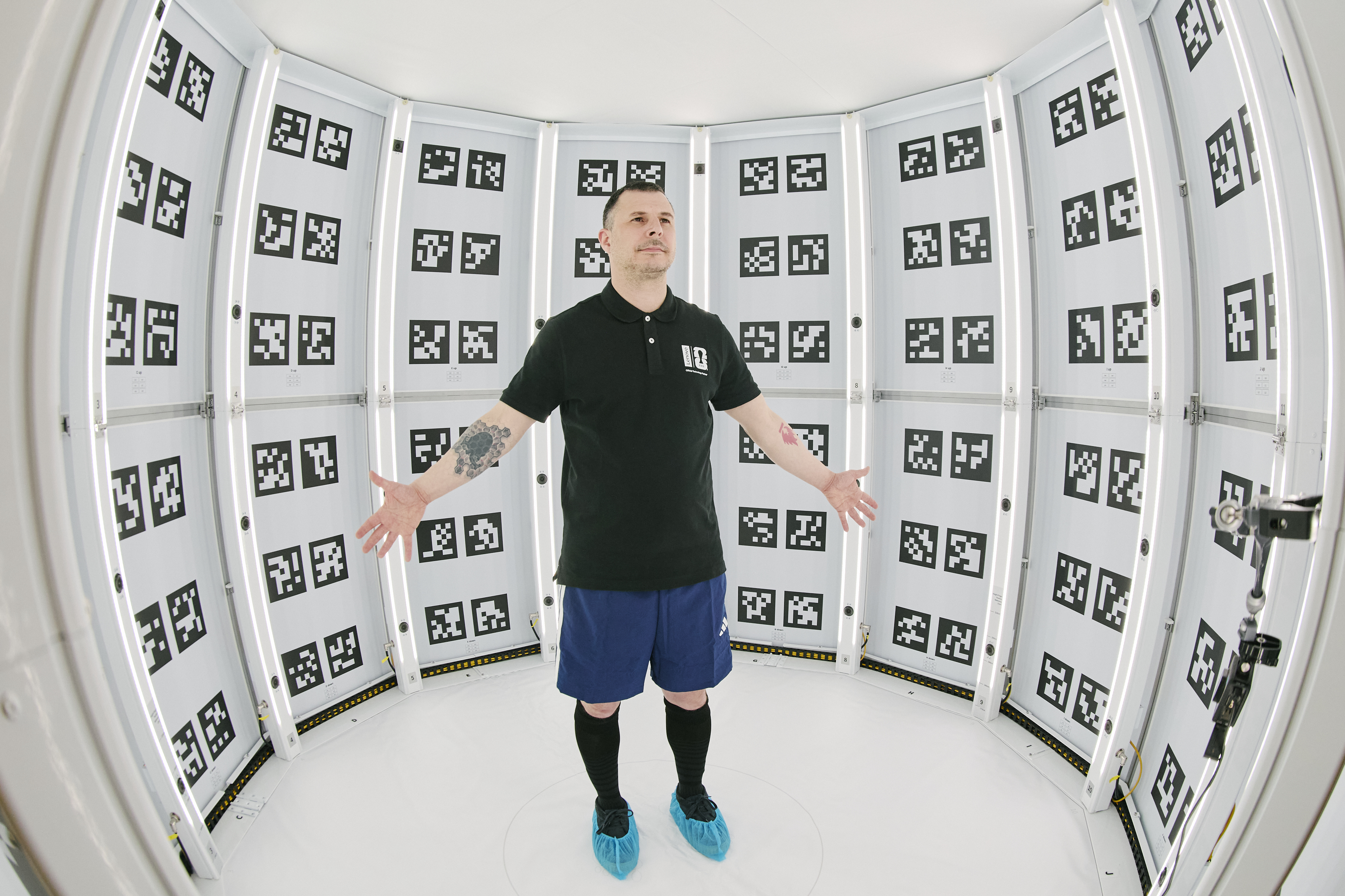
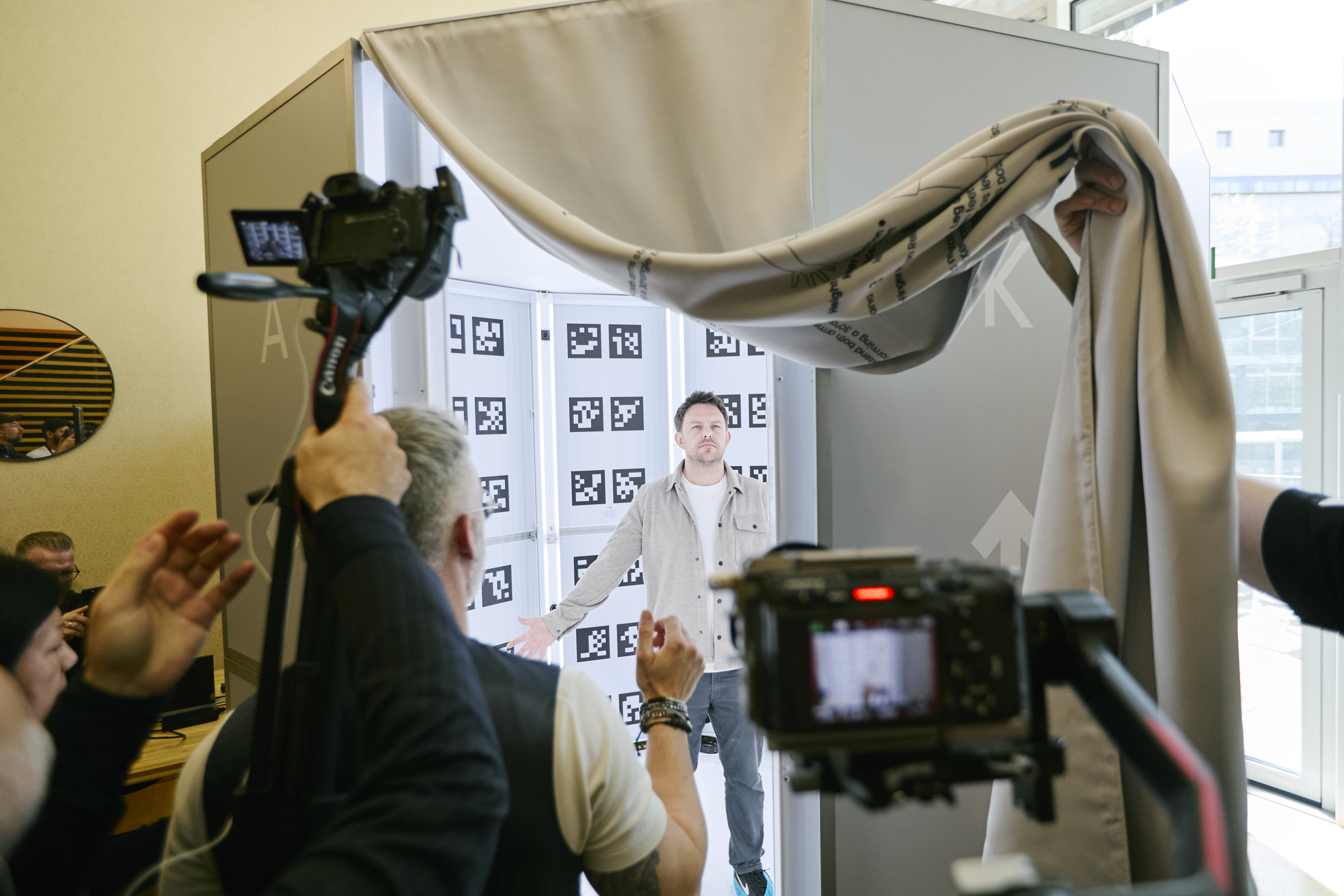
Then comes my turn. The photo capture system is part airport scanner, part Noughties music video, when every rapper wanted to be filmed with a fisheye lens. Covers go over my feet, and I step into a cylindrical white booth plastered floor to ceiling in what look like giant QR codes. Arms out, middle finger pointing downward to a height marker, it’s impossible not to feel like Cristiano Ronaldo.
Then 36 4K cameras fire simultaneously, and it's over in seconds.
Around 20 minutes later, I show up as a ghostly white mesh. Hit ‘texture’, and my face, my kit, even my tattoos are rendered with unnerving accuracy, like someone has put a mini me in a glass case.
Every World Cup player will go through this same process during their mandatory FIFA media day, with 28 portable rigs travelling between all 48 team base camps from June 4 to June 13.
ChatGPT for coaches
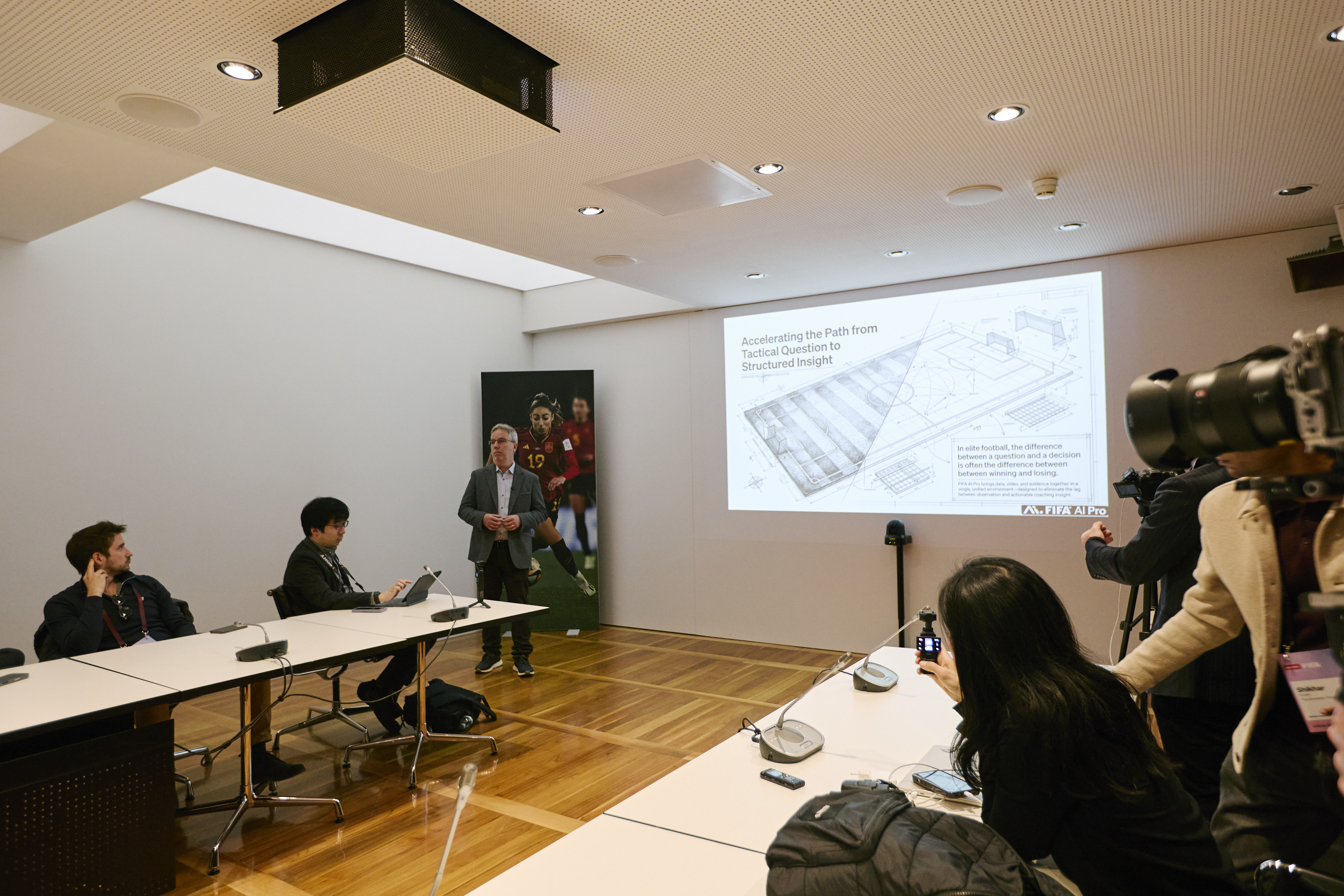
From the scanning booth, I move to a conference suite full of screens for a first look at Football AI Pro, a generative AI tactics tool giving every competing nation the same analytical capability.
All 48 nations, from Germany to Curaçao (which has a population of just 156,000 and is the smallest nation ever to qualify for the World Cup), get it free.
It starts like ChatGPT. You type a direct question in plain English, Spanish, Arabic, or Chinese, and it responds like a human. Then you go deeper, and it plays like Football Manager on steroids.
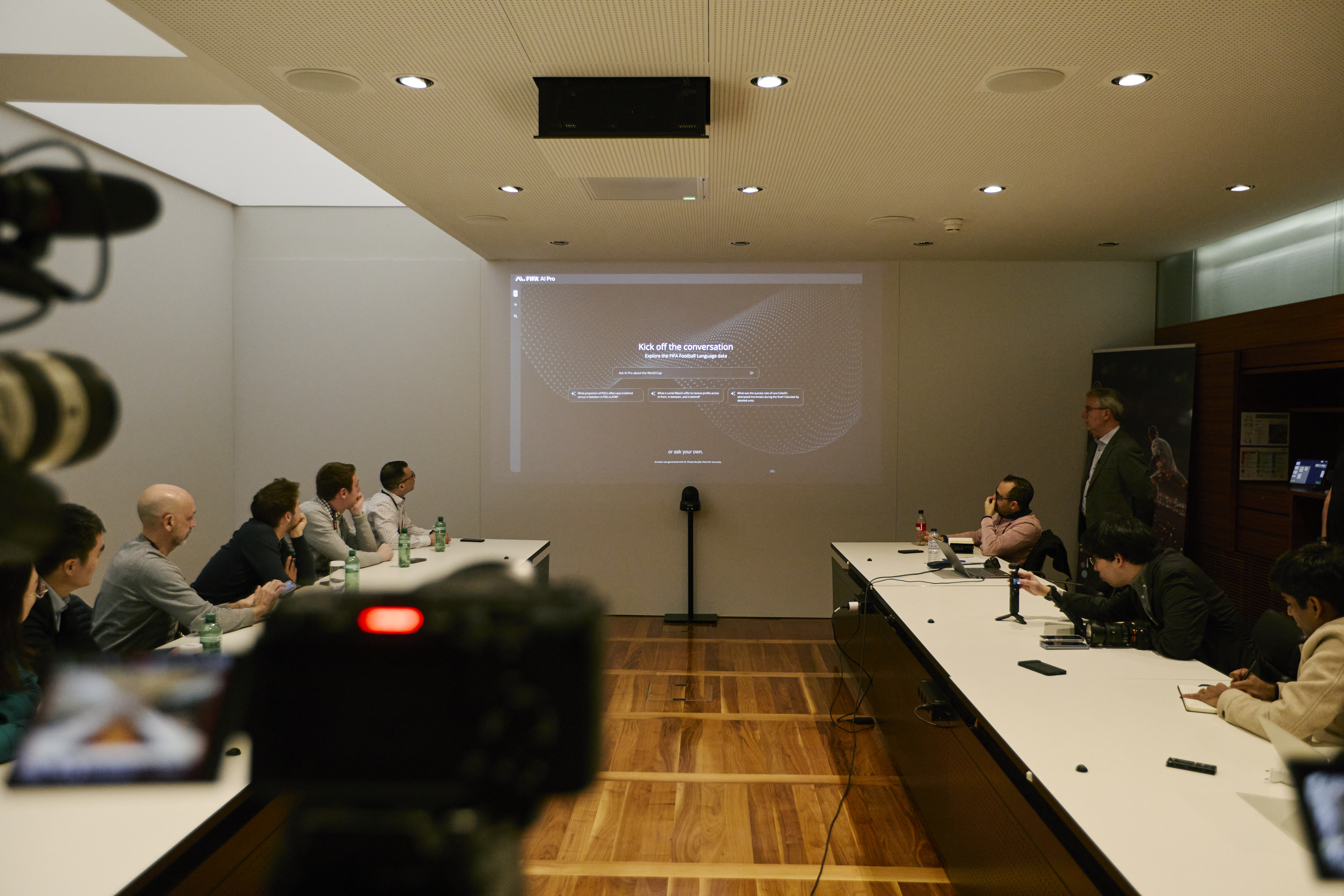
The live demonstration uses the PSG vs. Chelsea match from the Club World Cup. A single question returns nine attempts on goal, with heatmaps, pass maps, 3D reconstructions from the goalkeeper's perspective, and downloadable coaching clips, all generated in seconds.
"In elite football," says Alvaro Perez, Lenovo's senior product manager for the system, "the difference between a question and a decision is often the difference between winning or losing."
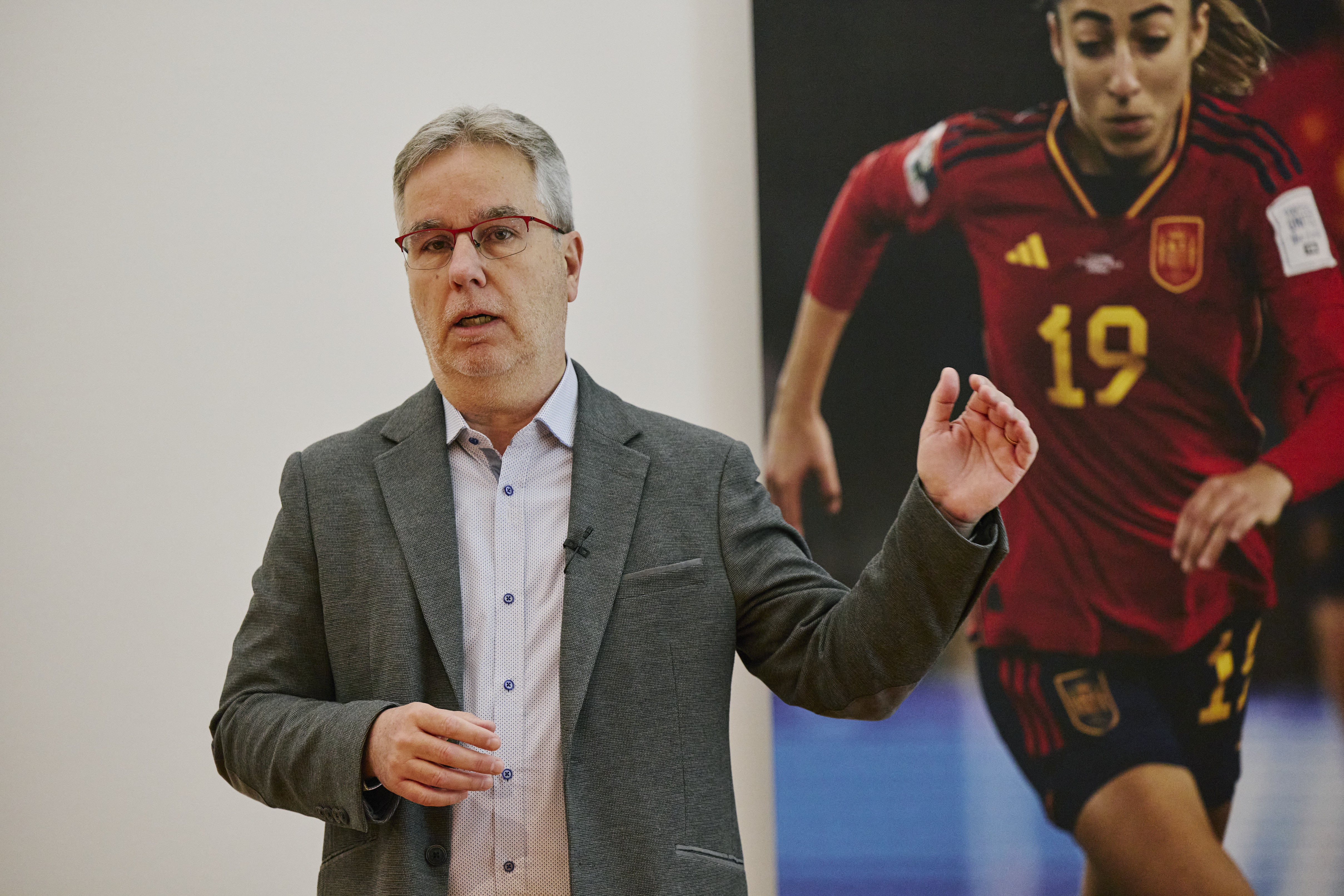
The tool is built on “FIFA's Football Language”, a knowledge graph standardizing every event in a match. "The big teams can come with an army of analysts, and analysis takes a lot of time and effort," says Perez. "FIFA wants to democratize things so the federations with fewer resources get the same insights."
Once enough World Cup match data exists, Football AI Pro can even analyse penalty takers and goalkeepers ahead of a shootout.
Despite similarities to large language models like ChatGPT or Claude, Lenovo claims the football-specific knowledge has been built from scratch with FIFA, though the system does use some underlying LLM architecture from as-yet-unnamed external providers. "If there is no solid answer," says Perez, "then it will reply: sorry, we cannot find the right data to provide this type of information." It will not guess.
The machine behind it all
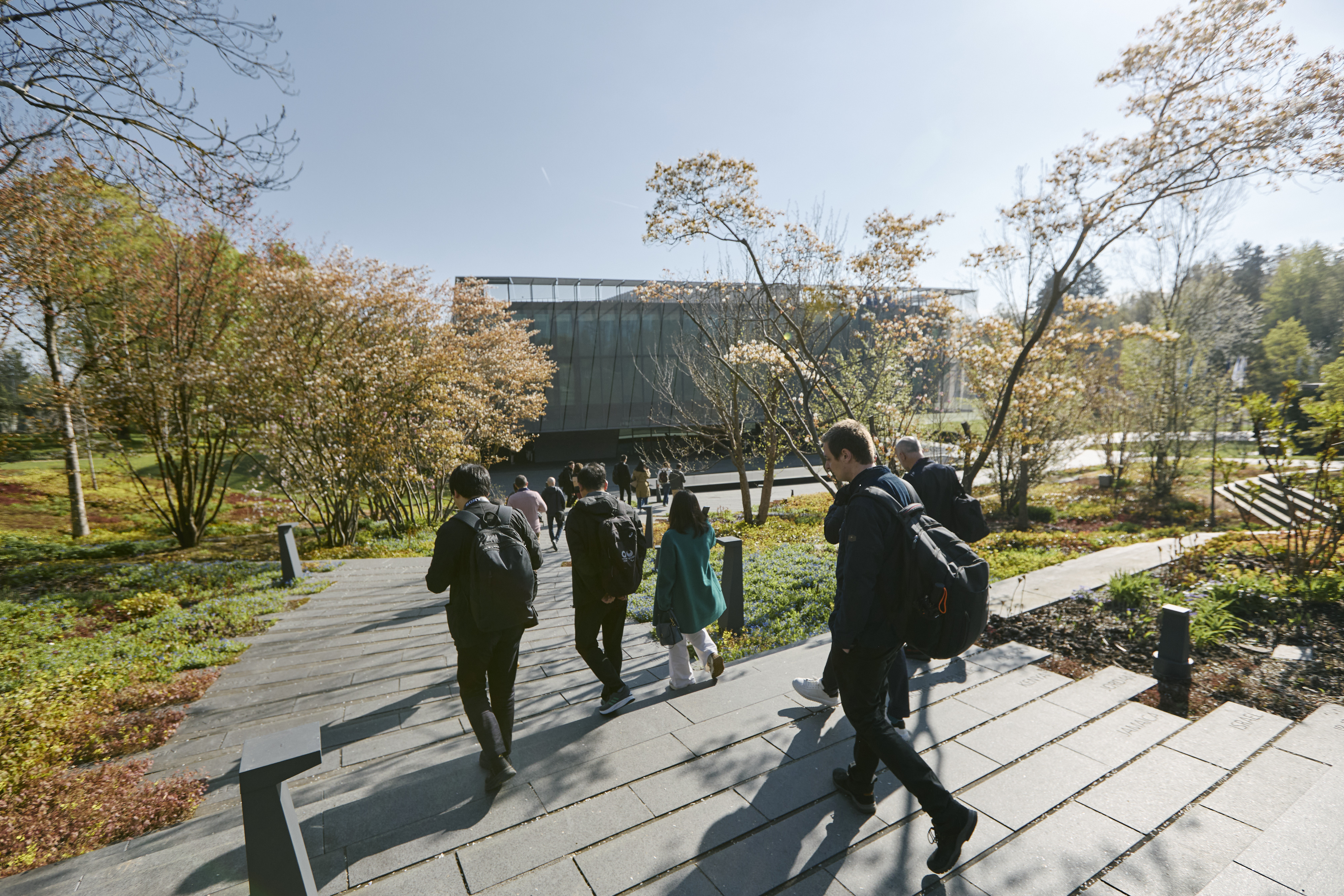
Supporting all of this is the most complex technology deployment in sporting history.
Over 17,000 Lenovo devices and 30,000 total assets are pre-configured at hubs in North Carolina, Toronto, and Mexico City across 16 stadiums and all FIFA venues across three countries. Open the laptop, and the right application is already there.
"Think of them as an empty shell," says Myles Spittle, Lenovo's services delivery lead for FIFA. "You might get a 10-minute window at a loading bay. There are security dogs, there's a whole host of things to consider." NSA and Secret Service protocols apply if the President attends.

A Technical Command Centre in Miami with a 60-foot LED wall monitors everything simultaneously. After the final whistle, engineers have five days to decommission everything, followed by two weeks' leave. The stress level, says Spittle, makes that break from work non-negotiable.
For the first time, viewers will also get a genuinely immersive, stabilized first-person view from on the pitch in real time.
Referee View uses the same gyroscopic stabilization found on F1 helmet cams and is processed live in under two seconds, for broadcasts worldwide. The players had better behave themselves.
As for FIFA’s tech partner, they say 'form is temporary, class is permanent' in football, but Lenovo won’t have the luxury of having an off day. "The World Cup doesn't get delayed by two weeks," says Spittle. "You either deliver, or you don't. And don't isn't an option."
The 2026 FIFA World Cup kicks off on June 11.

Follow TechRadar on Google News and add us as a preferred source to get our expert news, reviews, and opinion in your feeds. Make sure to click the Follow button!
And of course you can also follow TechRadar on TikTok for news, reviews, unboxings in video form, and get regular updates from us on WhatsApp too.
Former Metro tech editor, Stuff editor-in-chief and associate producer on The Gadget Show, James has been writing about consumer electronics and innovation for over 25 years. Experienced in both online and print journalism, he is currently tech correspondent for the Goodwood Festival of Speed Future Lab and editor of private jet magazine, Cloud. You’ll also find him contributing to titles including Enki, The Times, Shortlist, Spear’s, and U3A Matters, all while lamenting the untimely death of the MiniDisc.
What's Your Reaction?
 Like
0
Like
0
 Dislike
0
Dislike
0
 Love
0
Love
0
 Funny
0
Funny
0
 Wow
0
Wow
0
 Sad
0
Sad
0
 Angry
0
Angry
0







Comments (0)