

How the AI bubble could pop and take down the global economy, according to the BIS

AI and ML
Central bank for central banks sees shades of dotcom mania in hyperscaler capex binge
The central bank for central banks is concerned about the eye-watering sums being invested into AI, and it's raising the specter of a global recession should the bubble burst.
In its annual report for 2026, the Bank for International Settlements compared the current craze to historical events, including canal and British railway mania in the 1800s, electrification exuberance of the 1920s, and the dotcom boom of the 1990s.
The report states: “all shared one common trait: a genuine technological breakthrough that attracted capital in excess of what commercial returns could ultimately justify.
“These episodes ended with an eventual reversal in investment, inducing economy-wide recessions. The scale and pace of the current AI investment boom accompanied by expectations of large productivity payoffs bear resemblance to these precedents, highlighting potential downside risks in the near term.”
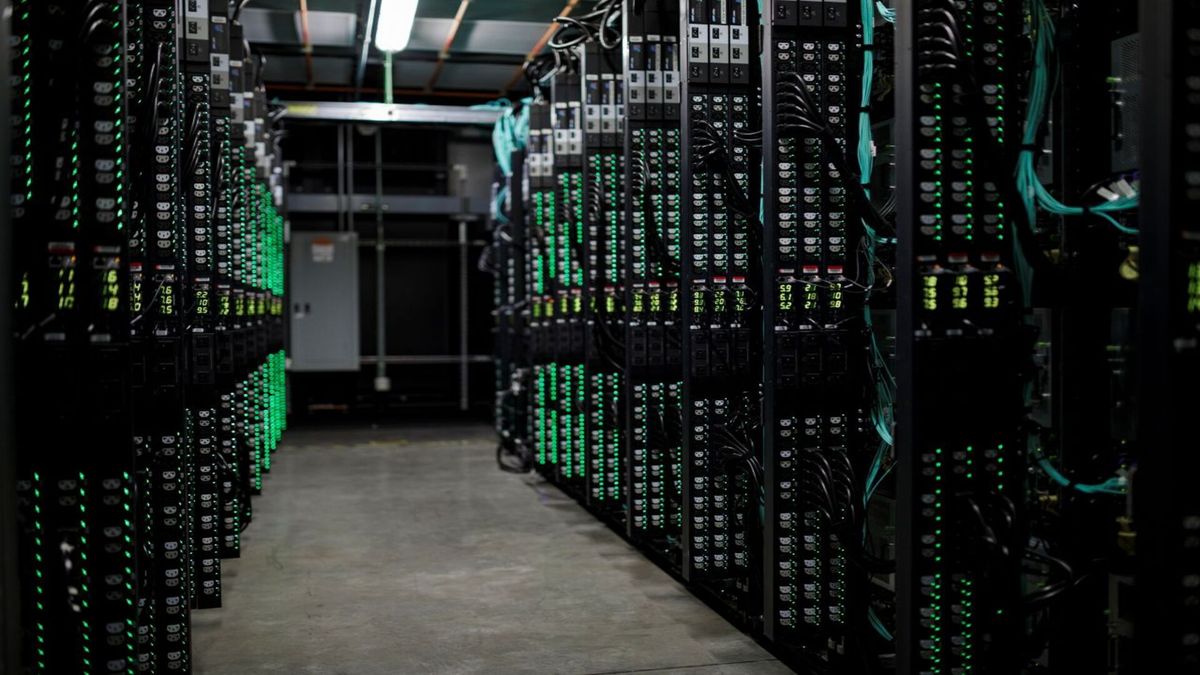
The Register has already reported that Amazon forecasts capital expenditures of $200 billion for 2026, Microsoft is projecting $190 billion, Google some $180 billon and Meta up to $140 billion. Oracle is also betting big on AI.
BIS estimates the five largest hyperscalers are set to spend more than a trillion dollars on AI-related capex in 2026 – and given the inflationary conditions regarding memory and that each rival is trying to outdo each other, that seems plausible.
“These commitments are outpacing earnings and the free cash flow of these firms, leading some to issue debt to raise additional financing. This investment race may be partly driven by the perception that only a small number of players with superior technology will ultimately dominate the market shares."
Intense competition is leading to the risk of the tech giants overcommitting resources to “investment projects with still uncertain returns, leaving all firms vulnerable to disappointments in AI payoffs.” This is because as competitive pressure drives spending ever higher, the net economic surplus for the tech industry declines and “could turn negative in adverse scenarios.”
“Disappointment in returns could trigger a sudden pullback in financing and turn the capex boom into a protracted investment bust with potential knock-on effects on the financial conditions,” the annual report continues.
The report also cited concerns about a looming "supply side roadblock" around issues like electricity availability, chip shortages and grid connection bottlenecks. AI datacenters are already putting pressure on energy prices and input costs with “potential spillovers to inflation.”
“Looking ahead, these temporary shortages may also amplify over-investment, as firms attempt to lock in future capacity through long-dated contracts that further expose them to any disappointments in demand.”
Should inflation spike or AI-led investment collapse, the macroeconomic consequences could be amplified by “existing financial vulnerabilities.” Policy rates being tightened to get a hold on inflation may precipitate a “sharp pullback in asset prices after a prolonged period of exuberant risk-taking, triggering disruptive macro-financial feedback loops.”
Given AI companies' “rising leverage” and a “growing footprint in credit markets”, a major change in optimistic sentiments towards these businesses could have serious financial knock-on effects. ”Vulnerabilities extend to their supplier ecosystem, including engineering, procurement and construction contractors whose balance sheets are comparatively weak, leaving them exposed to any Capex pullback by hyperscalers.”
The “opacity” of AI-sector financing is compounding vulnerabilities as corporations create a web of private arrangements – circular financing – and the terms of datacenter facility leases are often not fully disclosed, BIS adds.
The backdrop to all of this is that, while enterprises running pilots report some efficiency gains at a employee level, few report discernible productivity gains from AI projects that went into production environments at scale.
The Register has long discussed concerns about the dynamics of the AI industry, as outlined in the many links in this article above. It now seems that suits in the finance industry are waking up to the potential pitfalls too. ®
What's Your Reaction?
 Like
0
Like
0
 Dislike
0
Dislike
0
 Love
0
Love
0
 Funny
0
Funny
0
 Wow
0
Wow
0
 Sad
0
Sad
0
 Angry
0
Angry
0





Comments (0)