

DOJ sues states that rejected ICE requests for undercover license plates
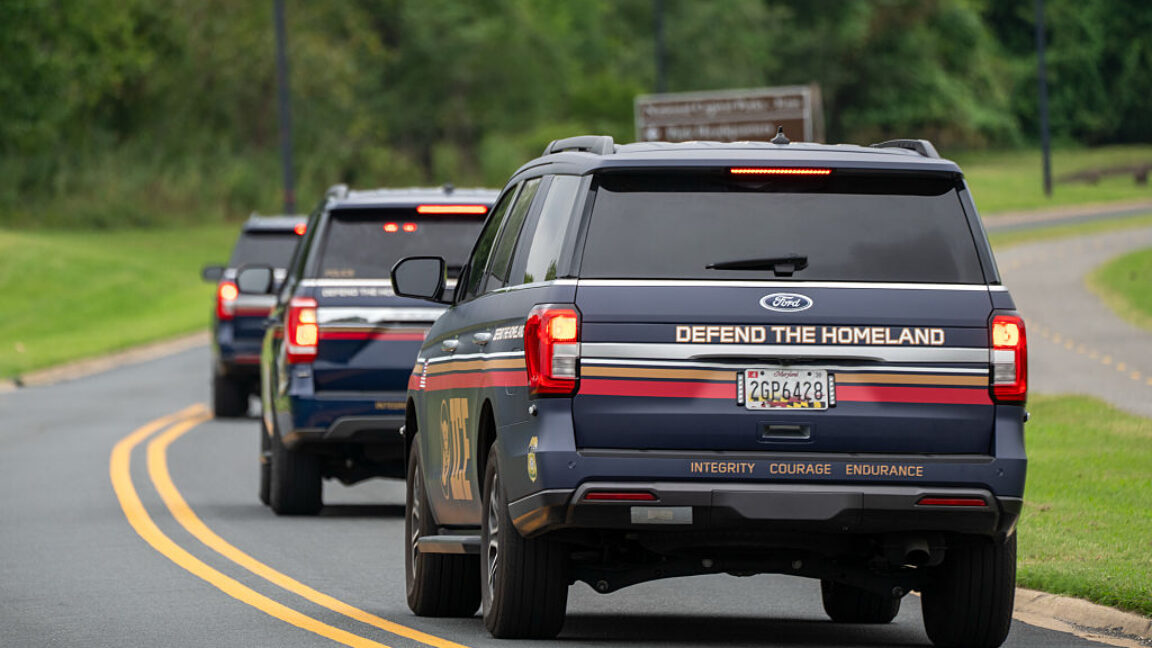
DOJ keeps accusing ICE monitoring sites of doxing, but evidence remains scarce.
The Trump administration continues to claim in lawsuits that ICE monitoring sites are doxing agents, without showing evidence that’s happening.
Most recently, the Department of Justice pointed to sites like ICEList.info and ICESpy.org in lawsuits it filed in an attempt to force four states to reverse policies blocking ICE agents from registering undercover license plates.
The DOJ alleged that the states’ policies are unconstitutional, unlawfully requiring federal officers to abide by different rules than state officers who can easily obtain undercover plates. Among risks to ICE agents denied undercover plates, the DOJ counted alleged threats of increased harassment and invasive tracking of officers, as well as the possibility that targets of ICE enforcement may more easily evade arrest.
In all the complaints, the DOJ claimed that confidential registrations also protect officers by making sure that no one can submit a public records request to access vehicle registration information. That is supposedly crucial since protesters and ICE watchers across the US keep photographing and filming ICE activity and posting that content online. Blocking license plate lookups would thwart additional risks of doxing, the DOJ claimed.
But the only support for claims of increased doxing that the DOJ provided was naming two ICE monitoring websites that prohibit doxing, and advocates have argued the websites are protected under the First Amendment.
ICESpy.org uses facial recognition to compare uploaded photos of ICE agents to public LinkedIn profile photos, only ever linking users to content that ICE agents themselves post online. The website explicitly warns that “threatening federal employees is a felony” and explains that it can’t be used to harass ICE employees, since “there is no additional useful information beyond what is self-reported on LinkedIn.”
Similarly, ICEList.info is designed to act as a sort of wiki, collecting updates on ICE enforcement activity and cataloging detentions, arrests, and deportations. Individual agents are listed “where sufficient evidence exists” to link them to enforcement events, the About page said, and any attempts to post information that could be used to dox agents violate site rules and are deleted.
“False submissions, harassment, or attempts to misuse the platform will be removed,” the About page said.
Dominick Skinner, who owns ICE List, told Wired that “he does not believe that what ICE List does is doxing,” primarily because “ICE List doesn’t post the home addresses of identified agents.”
In a press release, the DOJ said that it considers doxing to be the sharing of “a victim’s Social Security number, home address, home phone number, mobile phone number, and personal email address.” An incomplete Ars review spot checking 100 profiles of ICE agents on ICE List showed only publicly posted professional contact information.
DOJ’s lack of doxing evidence
The Trump administration has routinely relied on bare mentions of threats of doxing to pressure platforms into censoring social media posts showing ICE activity or linking to sites like ICE List, Freedom of Information Act lawsuits have claimed.
But there’s a notable lack of arrests to back up those claims.
As recently as January, the DOJ has insisted that ICE officers are facing an 8,000 percent increase in death threats. But that press release did not specify where that statistic comes from.
Instead, the agency shared the transcript of a single voicemail that was left for an ICE officer in Minnesota on January 24. In it, the caller doesn’t directly threaten violence, but appears try to intimidate the officer by saying that they “hope” that his wife and mom die and that “everything wrong that could go in your life happens.” They tell the officer that they “hope” the officer gets “hit by a bus” and “paralyzed.” And they end by calling the officer a “traitor to the American people” and urging that the officer “should kill yourself.”
In that press release, then-Department of Homeland Security Secretary Kristi Noem said that intimidation tactics like the voicemail and allegedly increased doxing attempts would not be tolerated. Threatening felony charges, she warned that “if you lay a hand on a law enforcement officer or dox our officers, you will be prosecuted to the fullest extent of the law.”
However, in the lawsuits over the undercover plates, the DOJ only pointed to one person charged with doxing an ICE agent. And notably, that suspect didn’t actually dox an ICE agent, but an ICE attorney whose family the suspect apparently had been harassing for quite some time prior to Donald Trump re-taking office.
In a press release last September, the DOJ announced that a 68-year-old Santa Monica man, Gregory John Curcio, was charged with doxing and harassing an ICE lawyer. Curcio allegedly posted the lawyer’s home address on Facebook and encouraged viewers to “swat” the target by placing a false emergency call at the residence that would incite police to respond with force.
As the DOJ spins it in the state complaints, this incident is part of a pattern of harassment where social media posts documenting ICE activity make it easier to target ICE agents at their homes. However, the press release noted that the address that Curcio posted was not the lawyer’s address, but her mother’s address. It further clarified that Curcio had allegedly harassed her mother “for years,” making false statements and engaging in a harassment campaign beginning in January 2024.
Other evidence that the DOJ relies on to suggest that agents need more protections in states blocking undercover plates include an October press release where the DOJ alleged that “credible intelligence” indicated that “Mexican criminals” were conspiring with “street gangs in Chicago” to “monitor, harass, and assassinate federal agents.” However, the state lawsuits did not suggest that any arrests had been made since the DOJ got that tip, nor did the DOJ share any evidence of attempted doxing, kidnapping, or assassinations linked to the intelligence.
States block plates to fight “lawless” ICE
It remains unclear whether the DOJ must prove that doxing occurred to make its case that states are unlawfully endangering federal officers while supposedly violating the Constitution’s supremacy clause, which mandates that federal law take precedence over state law.
The Trump administration is hoping that the court will agree that any policy that blocks federal officers from undercover plates that are available for state officers is unconstitutional. In a win, they want states permanently enjoined from blocking ICE from concealing their vehicle registrations.
But it might matter that the state’s intentions are to block allegedly “lawless” civil immigration actions that state officers play no role in.
In the Maine complaint, the DOJ acknowledged that states would have no reason to block state officers since “civil immigration enforcement is an exclusively federal function.”
At least one state will likely argue that ICE arrests based on alleged racial profiling violate the state’s law. In Washington, the state has alleged that some ICE activity runs afoul of the “Keep Washington Working Act,” the DOJ’s complaint said.
That law mandates that “no state agency, including law enforcement, may use agency funds, facilities, property, equipment, or personnel to investigate, enforce, cooperate with, or assist in the investigation or enforcement of any federal registration or surveillance programs or any other laws, rules, or policies that target Washington residents solely on the basis of race, religion, immigration, or citizenship status, or national or ethnic origin.” Essentially, the state claims it may be banned from providing confidential plates that could enable federal government surveillance programs targeting Washington residents by race, immigration, or citizenship status.
States seem confident that their policies are valid. They refused to rescind laws after the assistant attorney general sent demand letters to do so by May 22.
Maine’s secretary of state, Shenna Bellows, said that her state stopped issuing undercover plates to ICE for civil investigations due to “rumors of ICE deployment to Maine and abuses of power in Minnesota and elsewhere” that “raise concerns.”
“We want to be assured that Maine plates will not be used for lawless purposes,” Bellows said.
The DOJ’s complaint against Massachusetts cited that state’s governor, Maura Healey, as providing a similar rationale.
Any “federal, state or local agency engaging in legitimate criminal law enforcement work can receive a confidential plate,” Healey said. However, “we all know that’s not what ICE is doing. This is an agency that can’t and won’t even tell us who they are arresting and why. We are not going to enable their tactics.”
Each state’s undercover plates policies slightly differ.
Washington simply stopped issuing and renewing confidential plates in October 2025, and Massachusetts did the same, cutting off ICE and Customs and Border Patrol agencies from privileges in early 2026. Oregon followed suit in April, temporarily pausing confidential plate registrations for any federal agencies. If that state resumes issuing plates, it plans to avoid granting confidentiality for civil immigration investigations, the DOJ said.
Maine requires that the government jump through a single hoop. It will grant any confidential registrations, but only if the head of the federal agency seeking it will attest that any vehicles granted undercover plates “would not be used for federal civil immigration enforcement.” Violators risk “criminal penalties,” the DOJ emphasized, including a $2,000 perjury fine or up to a year in jail.

Ashley is a senior policy reporter for Ars Technica, dedicated to tracking social impacts of emerging policies and new technologies. She is a Chicago-based journalist with 20 years of experience.
What's Your Reaction?
 Like
0
Like
0
 Dislike
0
Dislike
0
 Love
0
Love
0
 Funny
0
Funny
0
 Wow
0
Wow
0
 Sad
0
Sad
0
 Angry
0
Angry
0











Comments (0)