

America gave up its rare earth edge. China took full advantage.
Decades of cheaper imports left US dependent on China for crucial rare earth processing.
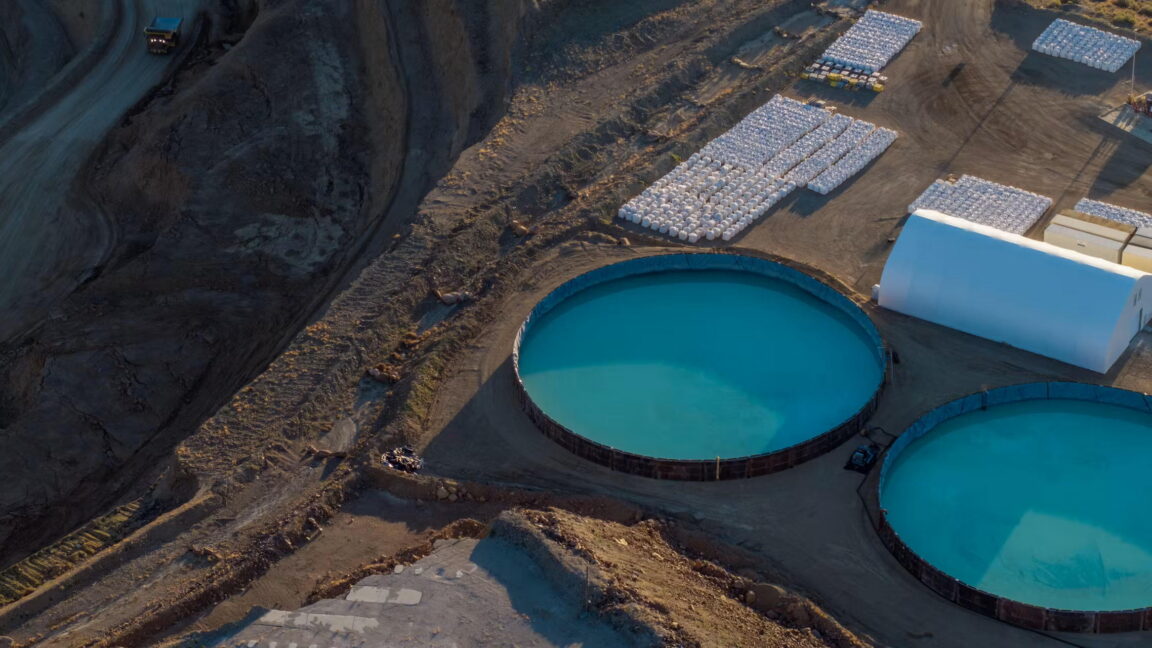
MP Materials mines and processes rare earth minerals in California, including neodymium-praseodymium oxide used in high-performance magnets. Credit: David McNew/Getty Images
Look around you, and you’ll see rare earth elements at work. A phone vibrates because a magnet moves a weight. Its screen was polished with cerium powder. Its connection to the rest of the world crosses oceans on cables amplified with erbium. If you drove today, a rare earth magnet helped you steer, and a cerium compound scrubbed the exhaust.
All of these devices function because of 17 metals collectively known as rare earth elements. The scientists who gave the group that name in 1794 created a misnomer. Cerium alone is about as common in the Earth’s crust as copper.
However, separating rare earth minerals from one another and from raw ore is intensely difficult. As a result, countries that control the processing of rare earth minerals have a lot of political leverage.
China processes most of the rare earth minerals used around the world, and it isn’t just consumer electronics that depend on Chinese exports. The US military’s F-35 fighter jets and Virginia-class submarines need rare earths too.
I spent years adjudicating war games for the US Navy. War games force players to identify the hidden constraints that render a beautiful plan untenable. Rare earth processing is exactly such a constraint.
China showcased the power of its rare earths leverage with a series of export controls issued in 2025 that it agreed to suspend—at least until Nov. 10, 2026. Controlling the supply enables a government to slow a rival’s growth, or halt it. China’s ability to extend the suspension of its export controls or let them go into effect gives it leverage on the geopolitical stage. In the parlance of Theodore Roosevelt, it’s a very big stick.
How China took the lead
California’s Mountain Pass mine led world production of rare earths until the late 1980s. Multiple instances of radioactive wastewater spilling from the mine into the Mojave Desert made it hard to keep domestic production running.
When China expanded its own mining and sold the processed materials for less, the logic of switching rare earth suppliers was easy.
Mountain Pass’ separation plant closed in 1998, and the mine itself stopped in 2002. MP Materials restarted mining there in 2017 as concern about access to rare earth minerals rose, but the US still imported more than two-thirds of the rare earth elements it used as recently as 2025.
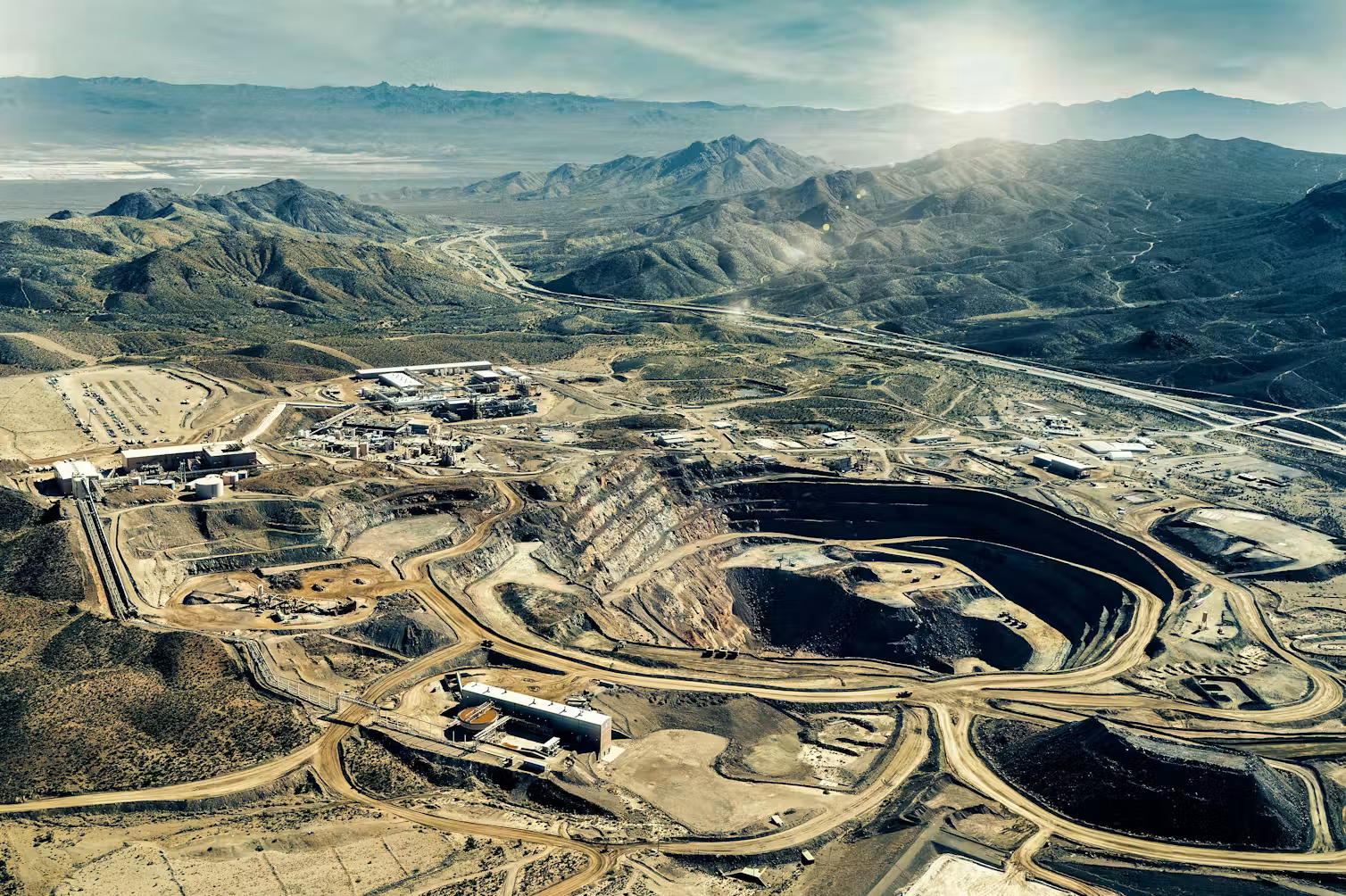
The US has rare earth minerals, but few mines. For years, it shipped much of what it does mine overseas for processing. MP Materials’ Mountain Pass mine and processing facility restarted in California in 2017.
The US has rare earth minerals, but few mines. For years, it shipped much of what it does mine overseas for processing. MP Materials’ Mountain Pass mine and processing facility restarted in California in 2017. Credit: Tmy350/Wikimedia Commons, CC BY-SA
China, which mined about 60 percent of the world’s rare earth elements used in magnets in 2024, handled about 91 percent of separation and refining.
Buyers using processing in China got material below the cost of making it themselves, and none of the cleanup bills or the bad press. But they ceded leverage to the processor in exchange. The trade was understood. It just didn’t look as threatening at first from a China that was still rising.
Why rebuilding is slow
The US Government Accountability Office cited estimates in 2010 that rebuilding a domestic supply chain including mining, separation, and magnet manufacturing would take as long as 15 years. Actually rebuilding that supply chain has been slow for several reasons.
China runs its plants with thousands of experienced engineers; the US has far fewer experts. Today’s industrial-scale cutting-edge technologies were developed in China, and the government there has no reason to share. Beijing also banned exports of the separation technology itself in December 2023.
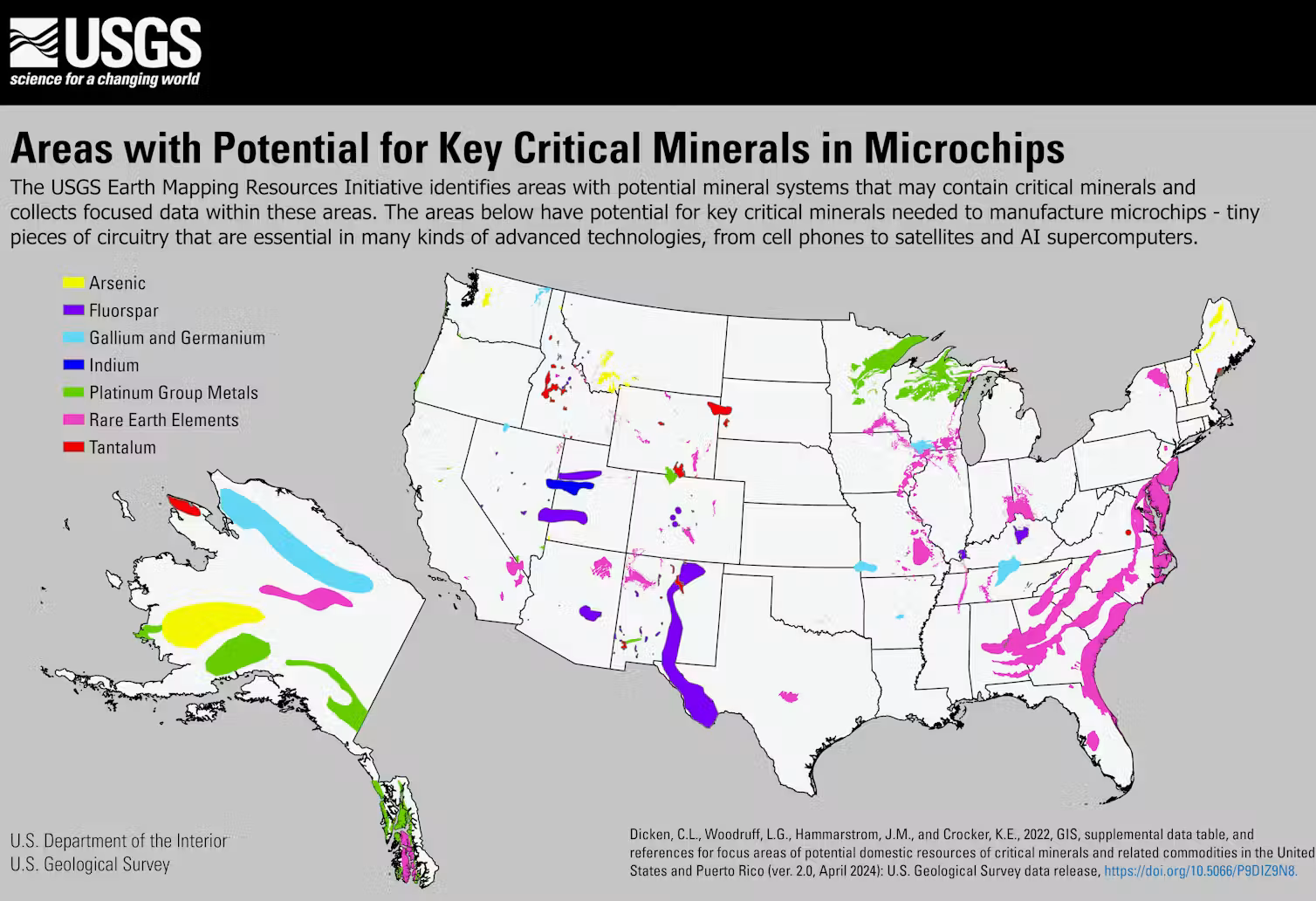
The US has rare earth deposits, but little mining. The pink areas in this US Geological Survey map are believed to have potential for rare earth deposits.
Credit: USGS
The US has rare earth deposits, but little mining. The pink areas in this US Geological Survey map are believed to have potential for rare earth deposits. Credit: USGS
The US government has committed more than $7 billion since April 2025 to try to rebuild US rare earth production capacity. The Pentagon bought $400 million of preferred stock in rare earth producer MP Materials in 2025, giving it 15 percent ownership of the company. MP Materials expects its next magnet plant to begin testing the equipment in 2028.
The Commerce Department also signed a letter of intent in 2026 to give a magnet maker, USA Rare Earth, $277 million in direct funding and a $1.3 billion loan, both aimed at developing facilities in Texas and Oklahoma.
But export roadblocks put up by China are making rebuilding that supply chain more difficult.
What happens on November 10
On Oct. 9, 2025, China’s Ministry of Commerce announced six wide-ranging export control measures. One, Announcement No. 61, affects what even factories abroad can export. A factory in Germany or Japan would need a Chinese license to export a product if Chinese-origin rare earths made up 0.1 percent or more of its value, or if it used Chinese rare earth technology.
After President Donald Trump met Chinese leader Xi Jinping that month, Beijing suspended six export controls until Nov. 10, 2026, in exchange for Washington pausing its “affiliates rule,” which imposes restrictions on companies that are majority-owned by certain blacklisted firms, for one year.
Both controls snap back into place automatically unless both governments extend their pauses.
What stays in place
Some of the export rules were never suspended, including licensing imposed by China in April 2025 on exports of seven of the heavier rare earths.
Automaker Ford saw how the export controls can affect a company when it had to idle its Chicago assembly plant for a week in May 2025 for want of magnets—critical to speakers and electrical motors—because of the export rules. Ford CEO Jim Farley described his supply as “day to day” because he had no alternate source. Ford was able to resume production only with Beijing’s approval.
On June 22, 2026, China’s Ministry of Commerce put 10 US companies on its export control list. Neither Chinese nor foreign firms can sell those companies any goods that have both civilian and military uses. Most of them build drones, radar, aerospace systems, and military vehicles. Two of them—MP Materials and USA Rare Earth—are the federally backed American companies furthest along in building a mine-to-magnet chain.
Beijing said its move was a response to a similar move by the Pentagon. My interpretation is that China picked MP Materials and USA Rare Earth because they are best placed to reduce America’s need for Chinese processing.
An extension of the pause on Nov. 10 would honor the truce, but the heavy rare earth licenses and the June 22 ban on the targeted firms would still apply. The truce means both parties get to play nice. It doesn’t mean they are being nice.
Three paths
For the US, leaving processing in China is the fastest and cheapest solution, but that leaves it exposed to Beijing’s restrictions.
Rebuilding a US rare earths supply chain would remove most US dependence on China for rare earths and the political leverage it implies. But it would take longer, startup costs run to the billions of dollars, and separation produces acidic, and sometimes radioactive, residues.
Building a supply chain with allies such as Australia or Japan, both of which have started to build capacity, would lower the risk of the US being cut off unilaterally. Japan has run this play with some success, but the suspended Chinese rules affect any use of their technology abroad.
President Xi’s Sept. 24, 2026, meeting with Trump may help determine the status of the Nov. 10 restrictions, but the larger conflict over leverage will continue.
Charles Edward Gehrke is a Sloan Fellow at the Massachusetts Institute of Technology (MIT)
This article is republished from The Conversation under a Creative Commons license. Read the original article.

The Conversation is an independent source of news and views, sourced from the academic and research community. Our team of editors work with these experts to share their knowledge with the wider public. Our aim is to allow for better understanding of current affairs and complex issues, and hopefully improve the quality of public discourse on them.
What's Your Reaction?
 Like
0
Like
0
 Dislike
0
Dislike
0
 Love
0
Love
0
 Funny
0
Funny
0
 Wow
0
Wow
0
 Sad
0
Sad
0
 Angry
0
Angry
0










Comments (0)