

When You Gaze Into the AI Slop, the AI Slop Also Gazes Into You
What happens when you look at an apple?
That question can be answered in two very different ways. A staunch materialist would likely give you a technically detailed explanation about photons bouncing off the apple’s surface and into the photoreceptors in your eyes, creating a visual representation of a red piece of fruit that actually exists “out there” in the world. Ask a philosopher or an artist, on the other hand, and they’re liable to veer into much more metaphysical territory: The apple isn’t merely a collection of atoms modeled by your brain’s visual system—it’s also a kind of portal, a pathway in to a mental realm of semiconscious associations and memories, the layout and feel of which is unique to each individual observer. An apple could be a symbol of health, for example, while for a more religiously inclined person, it might evoke the temptation of Eve in the Garden and the Fall of Man. Others might see a symbol of personal computing in the modern age, or the epiphany that supposedly led Isaac Newton to formulate his law of gravity.
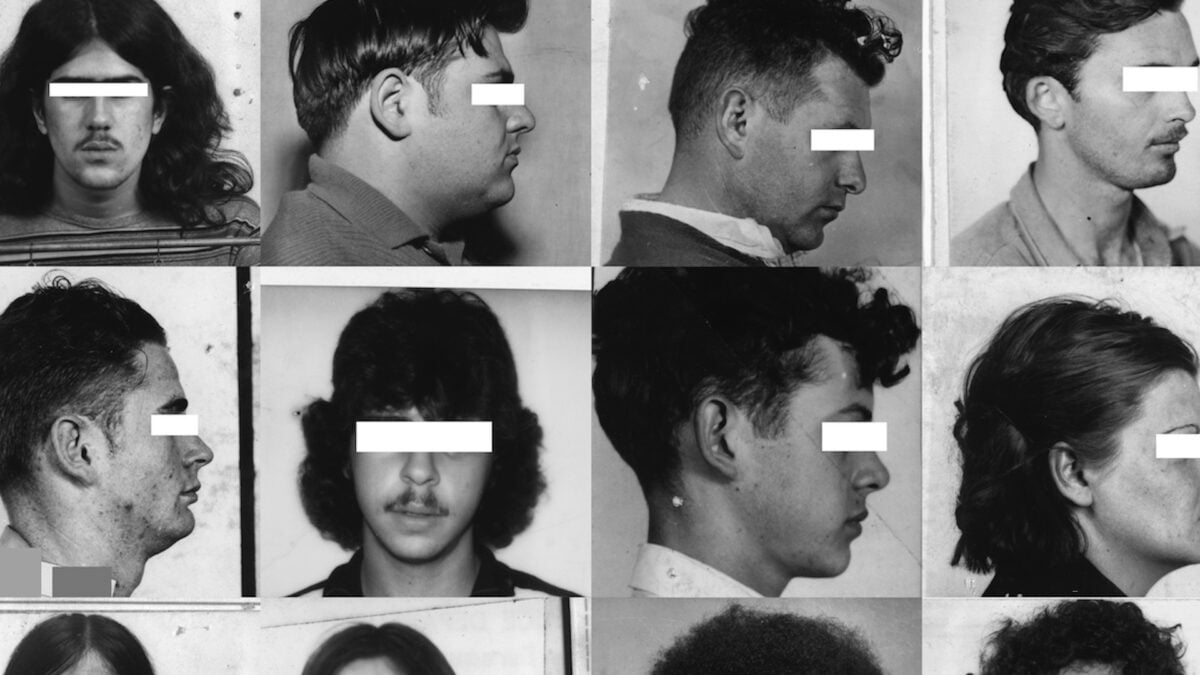
According to this latter school of thought, perception is never strictly objective; rather, our subjectivity colors our individual experience of the world to such a degree that the two are effectively inextricable. The Belgian artist René Magritte captured this ambiguity between perceiver and perceived in his 1964 painting Ceci n’est pas un pomme (This is not an apple). His point was that a visual representation of an apple, no matter how lifelike it might be, is not the thing it’s supposed to represent; we never experience the world in itself, as Kant would’ve put it. Visual art, like painting and photography, serves as a living link between the unique experience of the artist, on the one hand, and the viewer, on the other.
Given the deluge of AI-generated media that’s flooded the internet in recent years, this begs the question: What does it mean for humanity, our relationships with one another, and our ability to extract meaning from the world when a growing portion of the images we see and interact with are generated not by other living, feeling human beings, but by unconscious algorithms trained not to help us navigate the complexities of our lives but to hack and hold our attention?
This is the central question that the artist Trevor Paglen set out to grapple with in his latest book, How to See Like a Machine: Images After AI.
A geographer by training, Paglen has been deeply influenced by cybernetics, ancient mysteries, punk rock, classical music composition, investigative journalism, and a variety of other seemingly disparate fields that give his corpus of work a kaleidoscopic quality. If there’s a simple way to describe his work, it might be to say that he’s on a mission to shed light on the shadowy forces that shape our behavior and worldview below the threshold of our conscious awareness. He’s photographed mysterious celestial objects of unknown origin, “secret satellites,” undersea fiber-optic cables, spy planes, and military drones. In 2014, he worked as a cinematographer on Laura Poitras’s Academy Award–winning documentary about Edward Snowden, Citizenfour, and was awarded a MacArthur “genius grant” in 2017.
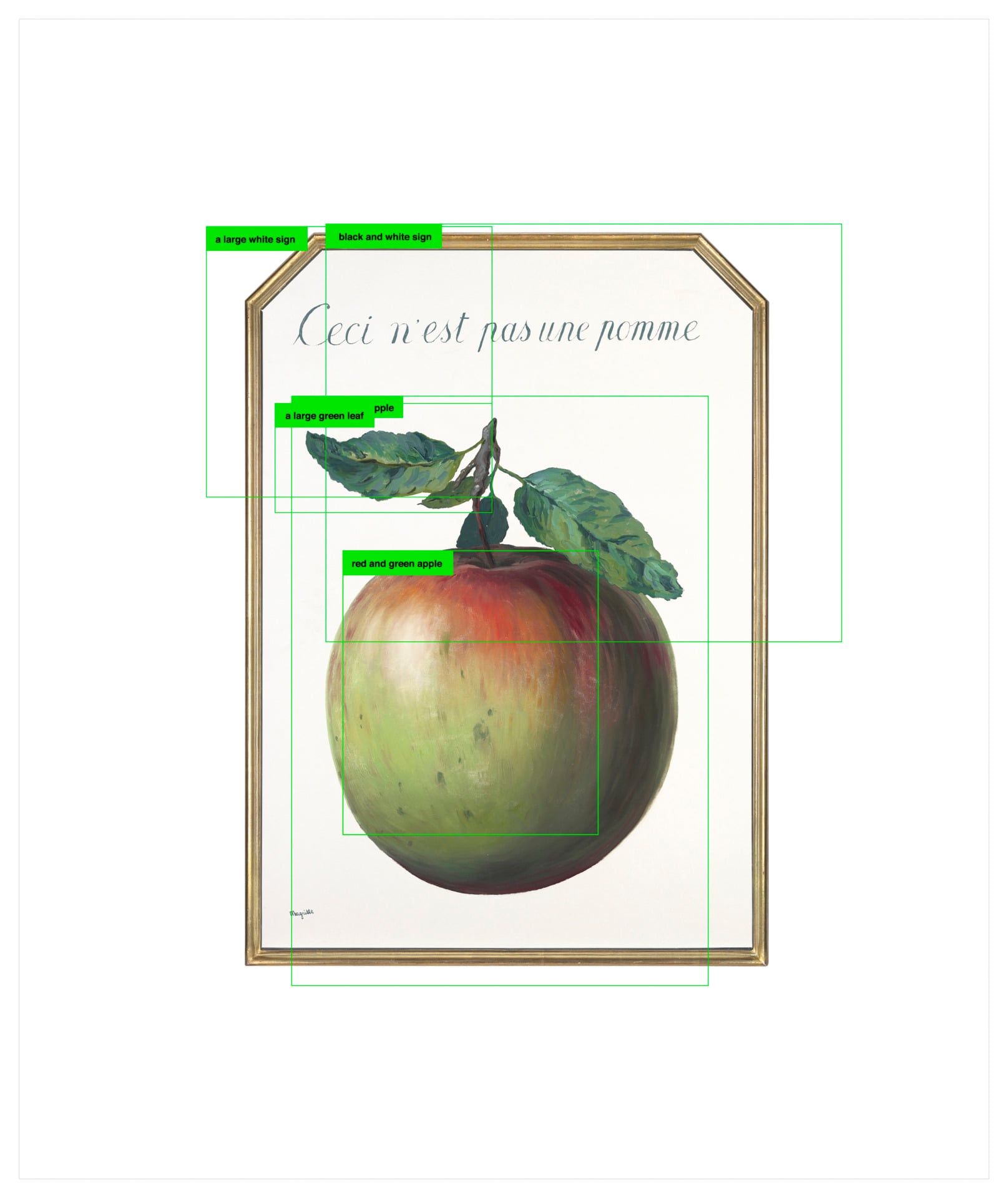
In a series of essays written over the course of the last decade, How to See Like a Machine makes the case that the rise of modern AI has ushered in an age in which the intersubjective nature of imagery is being replaced by something fundamentally new, something deeply alien, the psychological and political implications of which are yet to be realized. AI-generated images are not the unique product of a human mind but a reflection of training data that, in many cases, is deeply infected with the ugliest of human biases.
At the same time, all of our engagement with AI-generated content—be it a conversation with a chatbot about our mental health or clicking on an AI-generated ad—provides the underlying algorithms with valuable information about our unique preferences, behaviors, and overall psychological profile. We never just look at AI, Paglen argues: it’s always looking back at us.
 © Trevor Paglen
AI-powered mind control
Until now, anyone looking at an ochre handprint on a cave wall, a painting of an apple, or a photograph of bombed-out buildings could know with certainty that another human being had created the image. That is no longer the case.
A profusion of cheaply made AI-generated text, images, audio, and video across the internet is washing us away into a kind of epistemic purgatory, Paglen argues in his new book, where our once relatively stable tethers to a shared reality are being replaced by individual bubbles of algorithmically governed social media feeds.
Even more concerning for Paglen is what he regards as the subtle forces behind these algorithms: they are not objective—as much as big tech companies might claim otherwise—but are rather driven by the logic of commodification and surveillance. Every moment of our lives, even the most private and intimate, becomes an opportunity for the harvesting of personal data. “Smart” devices track our sleep rhythms and exercise habits, apps track our online shopping habits and sexual proclivities, and chatbots learn about our unique emotional triggers and anxieties.
In such an algorithmically mediated digital environment, Paglen argues, the means of exerting subtle forms of psychological manipulation, persuasion, and conformism that were once the exclusive domain of well-funded government programs—such as the infamous Cold War-era MK-Ultra—have now become effectively available to just about anyone; mind control has been democratized, thanks to AI. “If the postwar media landscape was characterized by spectacle, and the late twentieth and early twenty-first century by an age of surveillance, then we are entering a new phase,” he writes in the book. “One marked by affective computing, machine-learning-enabled optimization, neuroscience, and cognitive psychology…”
The “Society of the Psyop,” he calls it.
 © Trevor Paglen
Psyops, magic, and AI psychosis
Paglen is something of an expert on psyops: Much of his work has focused on photographing secretive government programs aimed at manufacturing delusion to preserve state secrets.
In the book, for example, he tells the story of Richard Doty, a former Air Force intelligence operative who, while stationed at Kirtland Air Force Base in New Mexico in the 1970s and 80s, was responsible for planting false flag information about UFOs and extraterrestrials in the minds of snooping journalists and others whose work threatened to expose military secrets.
Doty’s genius, Paglen argues, stemmed from his ability to reify his targets’ preexisting beliefs about aliens and UFOs, rather than trying to plant completely new beliefs. A rogue photographer who believed the lights he was seeing above Kirtland AFB belonged not to a new military spy plane but to an alien spaceship, for example, could be easily manipulated, via a few doctored documents, into becoming unshakably convinced that what he was seeing was, in fact, not of this Earth (thereby preserving the secrecy of the spy plane).
Stage magicians exploit a similar principle, according to Paglen. By taking advantage of the fact that our perceptual systems have been trained over the course of a lifetime to expect objects to adhere to the laws of physics, magicians can inject subtle illusions that subvert our expectations and make us believe what we know, intuitively, to be impossible.
To anyone who’s been paying attention to the phenomenon widely referred to as “AI psychosis,” all of this might seem familiar. In recent media coverage, the informal phrase ‘AI psychosis’ has been used to describe cases in which chatbots recursively reflect users’ preexisting worldviews back to them, until that worldview—no matter how delusional it may seem to the rest of us—starts to become indistinguishable from reality itself. And that’s exactly Paglen’s point: the psychological buttons which the psyoperatives like Doty and stage magicians know how to exploit are now being pressed every day, and at a much more personalized level, by the legions of algorithms that are being woven into the fabric of our day-to-day lives.
AI chatbots like ChatGPT are “speaking to you or creating text for you in a way that is akin to the way another human would do,” Paglen told Gizmodo. “There’s a kind of magic to that.” He also points out that even the tech companies building these tools do not fully understand how they arrive at their outputs, further lending it an air of supernatural authority.
But there’s a critical difference between the psyops of yesteryear and the present. Whereas conventional psyops were ostensibly executed by human beings in pursuit of some kind of human interest, the AI systems now reshaping our perceptions are driven by the much murkier logic of “engagement.” The algorithms curating our social media feeds and determining which ads we see online are designed to hold our attention for as long as possible. For Paglen, this points to what he considers to be a profound shift in our relationship with media:
“The images that you see are evolving in response to how you’re looking at them,” he told me. “You’re looking at them, [and] they’re looking at you.”
Privacy is resistance
For many people, AI is becoming less and less optional. Tech companies like Microsoft, Google, and Apple are embedding the technology into the services and devices that we rely on every day, and it’s increasingly rare that one peeks into social media and doesn’t see some kind of AI-generated media. It’s all happening so quickly that a semiconscious feeling of cultural whiplash is completely understandable. Much of the content we see online today has been selected and served by algorithms that have been built with a superhuman ability to capture and hold your attention. Every click, like, and view hones that ability a little bit more.
Paglen raises more questions than answers about what this all means for the future of humanity, and I think that’s the point. Like Magritte’s apple (or non-apple), How to See Like a Machine celebrates the ambiguous nature of human perception—“the slippages between representation and reality,” as Paglen puts it in the book—by contrasting it with the industrialized and profit-driven mechanics underlying machine vision.
As the book’s title suggests, Paglen argues that to remain the masters of our fate, we must all learn how algorithms represent reality. He also says that in an age when tech companies are trying to extract data from us even when we’re asleep, we must stop thinking about privacy as something taken for granted and instead turn it into a deliberate practice, much as you might make an effort to meditate or go to the gym daily: “one must create deliberate inefficiencies and spheres of life removed from market and political predations,” he writes.
The alternative is a future in which virtually every moment of our lives is monitored by algorithms and transformed into an opportunity for data-extraction: “the securitization and commercialization of literally everything,” Paglen told me. “Your sleep, your driving, your television-watching… anything you can conceivably think of as being turned into a commodity. And I think that comes at the expense of life, honestly.”
What's Your Reaction?
 Like
0
Like
0
 Dislike
0
Dislike
0
 Love
0
Love
0
 Funny
0
Funny
0
 Wow
0
Wow
0
 Sad
0
Sad
0
 Angry
0
Angry
0






Comments (0)