

CISA: Microsoft SharePoint RCE flaw now actively exploited

The U.S. Cybersecurity and Infrastructure Security Agency (CISA) warned on Wednesday that attackers have begun exploiting a high-severity Microsoft SharePoint remote code execution vulnerability.
Tracked as CVE-2026-45659, this security flaw stems from a deserialization of untrusted data weakness, and it allows attackers with low privileges to execute arbitrary code on unpatched SharePoint servers in low-complexity attacks that don't require user interaction.
"Any authenticated attacker could trigger this vulnerability. It does not require admin or other elevated privileges. In a network-based attack, an authenticated attacker, who has a minimum of Site Member permissions (PR:L), could execute code remotely on the SharePoint Server," Microsoft explains.

"The attack vector is Network (AV:N) because this vulnerability is remotely exploitable and can be exploited from the internet. The attack complexity is Low (AC:L) because an attacker does not require significant prior knowledge of the system and can achieve repeatable success with the payload against the vulnerable component."
Microsoft released security updates for SharePoint Enterprise Server 2016, SharePoint Server 2019, and SharePoint Server Subscription Edition to address this vulnerability on May 21, saying that the CVE had been accidentally omitted from the May 2026 Security Updates.
Internet security watchdog group Shadowserver is currently tracking over 10,000 SharePoint servers exposed online. However, there is no information regarding how many of these devices have already been secured against ongoing CVE-2026-45659 attacks.
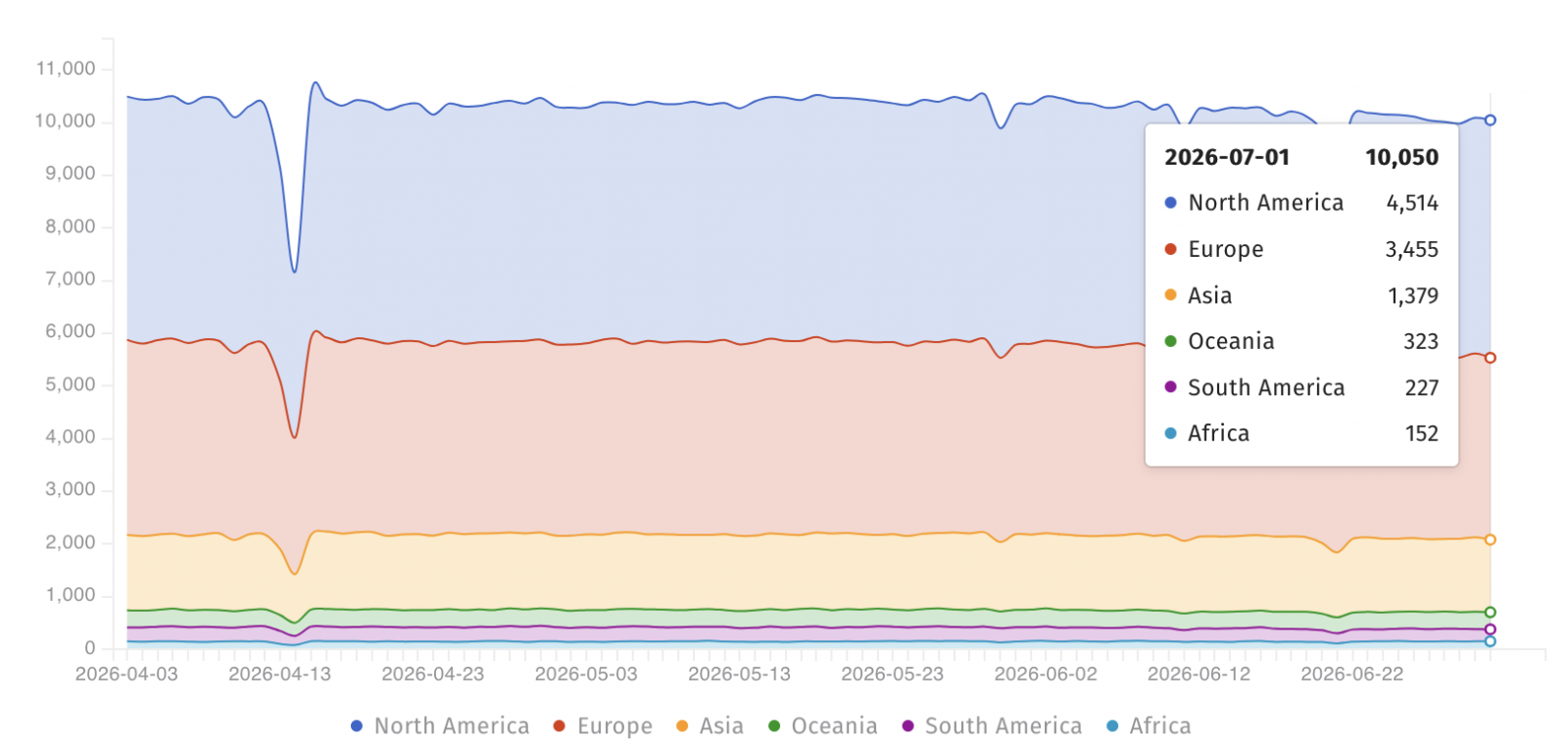 SharePoint servers exposed online (Shadowserver)
With the April 2026 Patch Tuesday, Microsoft addressed another SharePoint vulnerability that was exploited in zero-day attacks.
On Wednesday, CISA added the vulnerability to its Known Exploited Vulnerabilities Catalog (KEV), ordering Federal Civilian Executive Branch (FCEB) agencies to secure their servers by Saturday, as required by Binding Operational Directive (BOD) 26-04.
BOD 26-04 was issued last month and requires U.S. federal agencies to prioritize patching based on whether the security flaw is included in CISA's KEV catalog, whether exploitation can be automated for large-scale attacks, whether the asset is publicly exposed online, and whether successful exploitation grants attackers partial or total control of the targeted device.
"This type of vulnerability is a frequent attack vector for malicious cyber actors and poses significant risks to the federal enterprise," the cybersecurity agency warned yesterday. "Follow applicable BOD 26-04 guidance for cloud services or discontinue use of the product if mitigations are unavailable. Stakeholders are responsible for evaluating each asset's internet exposure and ensuring adherence to BOD 26-04 patching guidelines."
Since 2021, CISA has tagged 11 Microsoft SharePoint vulnerabilities that have been abused in the wild, with seven of them also exploited in ransomware attacks.

Test every layer before attackers do
Security teams log 54% of successful attacks and alert on just 14%. The rest move through your environment unseen.
The Picus whitepaper shows how breach and attack simulation tests your SIEM and EDR rules so threats stop slipping by detection.
What's Your Reaction?
 Like
0
Like
0
 Dislike
0
Dislike
0
 Love
0
Love
0
 Funny
0
Funny
0
 Wow
0
Wow
0
 Sad
0
Sad
0
 Angry
0
Angry
0







Comments (0)