

Britain hopes £7.3M will help electric and hydrogen aircraft take off

OFFBEAT
Government finds some loose change down to chuck at emission-free flight research
The UK is stumping up a modest £7.3 million ($9.7 million) to develop the infrastructure needed for electric and hydrogen-powered flight.
The Department for Transport (DfT) says the money will be shared among eight projects covering airport charging, hydrogen storage, and flight demonstrations.
The funding forms part of a wider £43 million ($57 million) package for next-generation aviation technology, according to the DfT, although it remains small potatoes for potentially important future technologies.
One project is led by Bristol-based Vertical Aerospace, developer of the Valo electric flying taxi.
At the Farnborough International Airshow last week, its VX4 prototype publicly demonstrated the transition from helicopter-style vertical flight to airplane mode and back again. This involves half of its eight propellers swiveling from a vertical lift to a forward propulsion position.
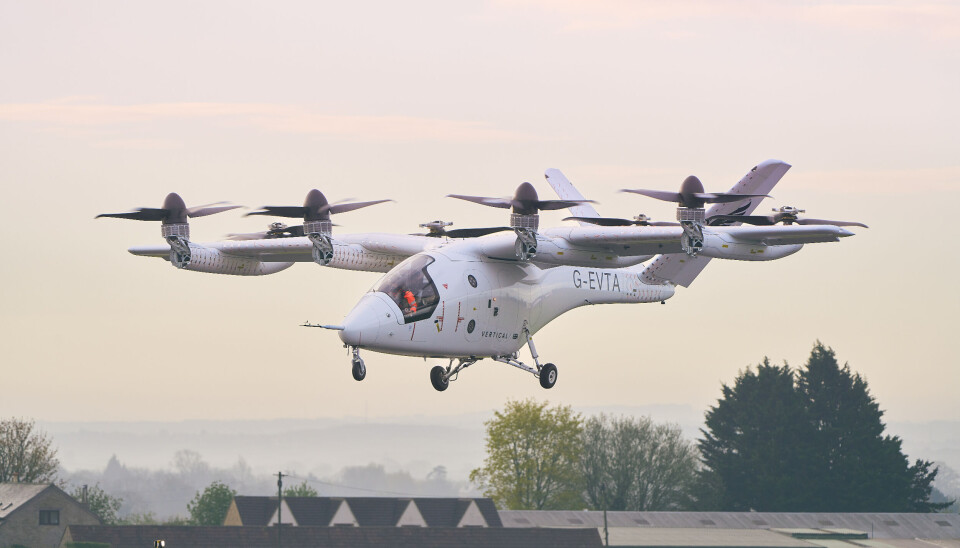
Vertical Aerospace VTOL electric aircraft Gareth Iwan Jones
The aircraft is designed for human pilots and up to four passengers, and is claimed to have a range of up to 100 miles (160 km) at a speed of up to 150 mph (241 km/h) – all under electric power and with no operating emissions. The Ministry of Defence is said to have expressed an interest in the vehicle.
The project that Vertical is the lead on is ECLiPSE (electrified charging and liquid-cooling provision for support of e-flights). Working with the University of Bath and InnCat, it hopes to develop high-power charging and thermal management systems that make electric routes commercially viable.
Another program focused on electric flight is SEAN, or the Scottish electric aviation network. This will see a consortium of firms deliver a real-world demonstration of zero‑emission regional flight over three months, using Inverness Airport as a hub connecting to other Scottish airports.
The aircraft involved will be the Beta Technologies Alia CX300, another small electric plane with a maximum speed of 176 mph (283 km/h) and a range of 387 miles (622 km). This is available in both vertical and conventional take-off versions, with the latter used for this program.
Other projects will examine how airports could introduce the infrastructure needed to handle liquid hydrogen.
One is the Bristol Airport liquid hydrogen supply assurance and architecture study, which aims to produce a practical model for wider adoption.
Bristol Airport is also involved in CHOSAN, or cryogenic hydrogen optimized systems for aviation. Building on recent advances in hydrogen propulsion, the project will deliver a series of point-to-point flights on regional routes of up to 500 km (310 miles).
Bristol also features in Project HyPRIME, the goal of which is to develop, build, and demonstrate a mobile hydrogen refueling vehicle capable of delivering the stuff to aircraft needing it.
Aerospace firm Airbus is one company working on a hydrogen-powered airliner. The ZEROe project is for an electric propeller-driven plane, using hydrogen fuel cells as the power source.
However, Airbus has revised the project's roadmap, casting doubt on whether the aircraft will enter service in 2035 as originally envisaged.
"The next generation of flight is taking off in the UK," declared Secretary of State for Transport Heidi Alexander.
"We're working hand in hand with industry to cut emissions, drive innovation, and ensure the UK remains one of the best places in the world to build, test, and fly the aircraft of tomorrow." ®
What's Your Reaction?
 Like
0
Like
0
 Dislike
0
Dislike
0
 Love
0
Love
0
 Funny
0
Funny
0
 Wow
0
Wow
0
 Sad
0
Sad
0
 Angry
0
Angry
0






Comments (0)